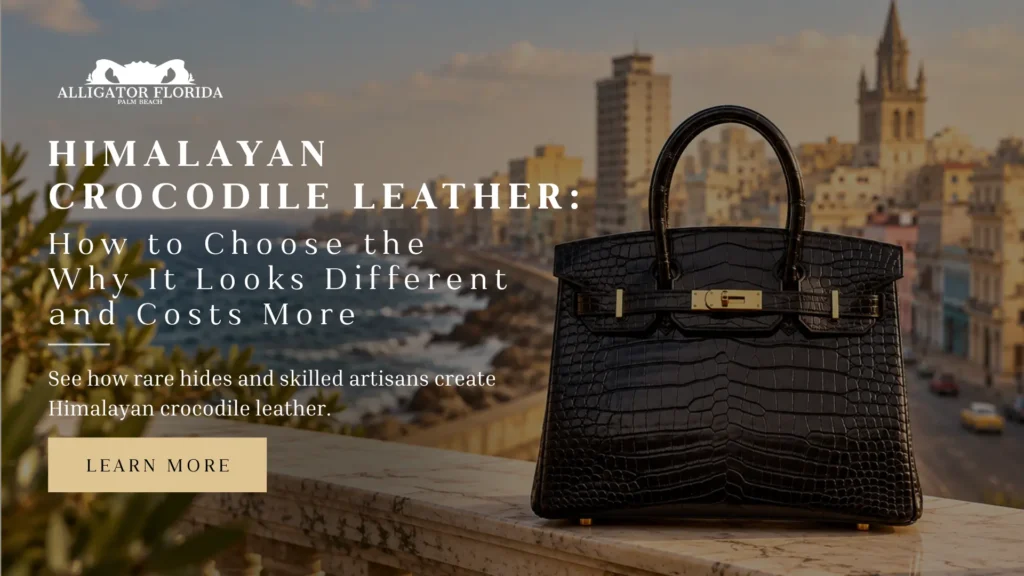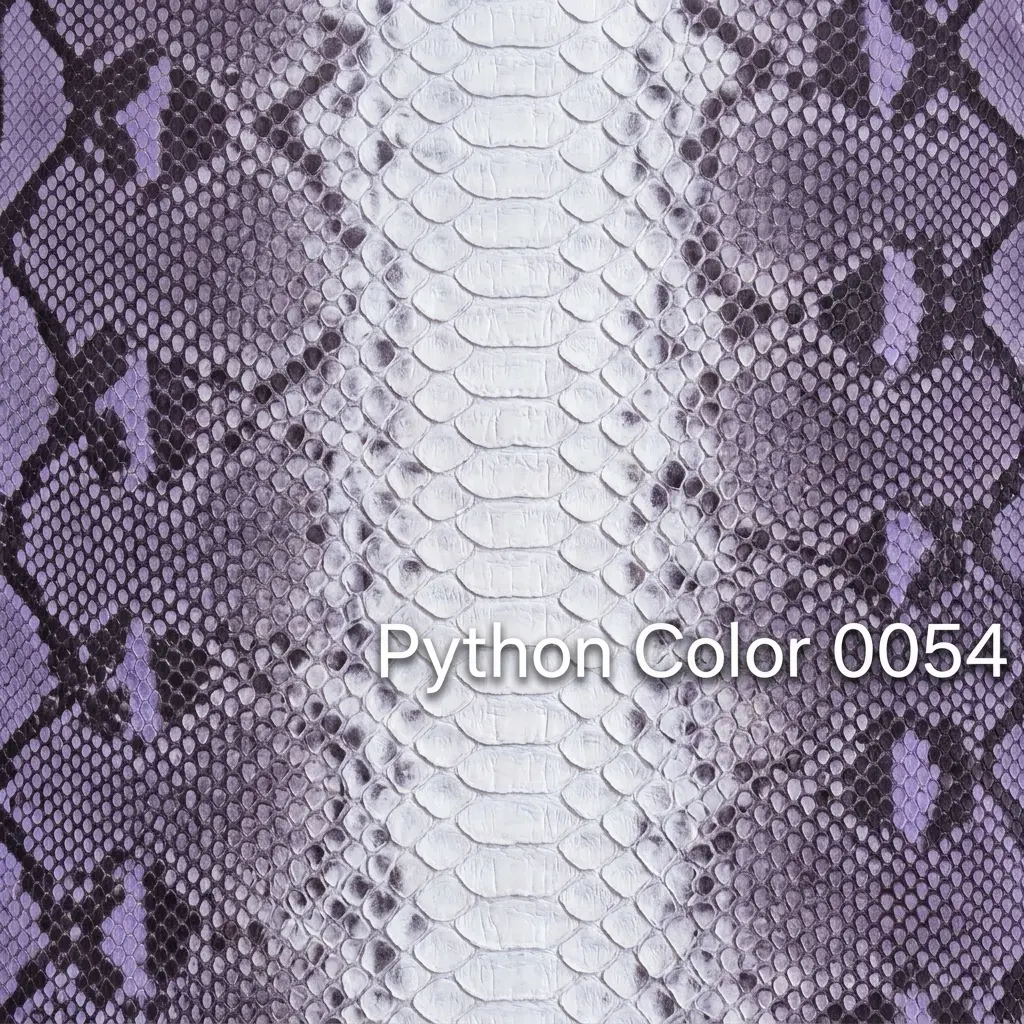

Himalayan crocodile leather is not a separate crocodile species or leather sourced from the Himalayas. “Himalayan” refers to a specialized finish known for its pale white or ivory center transitioning into darker gray, taupe, or earthy tones toward the edges. Producing that balanced gradient requires suitable crocodile skins, careful finishing, skilled workmanship, and more selective production—all factors that can make Himalayan crocodile pieces cost more.
Few crocodile finishes are as immediately recognizable as Himalayan.
Instead of one uniform color, the leather gradually transitions from a light center toward darker outer areas, giving it the appearance that inspired its name: snow-covered Himalayan peaks surrounded by rocky mountain tones.
But the look is not simply a different crocodile color. It requires a much more demanding approach to finishing the leather.
The term Himalayan crocodile leather describes a finish applied to genuine crocodile skin.
It does not mean:
The recognizable effect comes from carefully processing and finishing the hide to produce a controlled gradient.
The Saint Mary Himalayan Crocodile Bag is a clear example. Its genuine crocodile leather transitions between snow-white and rock-gray tones across a structured handbag.
If you are still learning how crocodile compares with other exotic skins, our guide to alligator, crocodile, and Python leather explains the broader material differences first.
Standard crocodile leather can be dyed in relatively consistent colors such as black, brown, red, or other shades.
A Himalayan finish is different because the color is intentionally graduated.
Typically, you will see:
Because the center is so light, flaws and inconsistencies can also be harder to disguise than they would be under a dark or heavily saturated color.
That makes skin selection particularly important.
Several factors can contribute to its higher price.
A pale gradient leaves little room to conceal major blemishes or uneven areas. Cleaner skins with attractive scale patterns are therefore more suitable for this type of finish.
Moving smoothly from pale tones into darker edges requires much more control than creating a single uniform color.
An uneven transition, staining, or inconsistent absorption can affect the finished appearance.
The person finishing the leather must control how the tones move across the hide while maintaining the appearance of the crocodile scales.
This requires additional time and expertise.
Not every crocodile skin is suitable for a very pale, balanced finish, and not every attempt will necessarily achieve the intended visual result.
More selective production can increase material costs.
Himalayan-style crocodile has become highly recognizable in luxury leather goods. Limited production combined with demand for the distinctive finish can also influence pricing.
However, Himalayan does not automatically determine the final price. Bag size, construction, lining, hardware, craftsmanship, species, and seller can all affect what a finished piece costs.
The finish does not have to appear only on handbags.
The White Himalayan Crocodile Hornback Belt combines the pale Himalayan colorway with raised hornback ridges.
That creates a very different result from the smoother structured surface of the Saint Mary bag.
For comparison, a more conventionally finished crocodile design such as the Crocodile Leather Bag – Yané shows how color, cut, and finish can change the overall character of genuine crocodile leather.
If you are unsure whether a leather piece is crocodile or alligator, see our alligator vs crocodile leather identification guide.
Do not judge a Himalayan piece only by how white it looks.
Check:
For a broader buying checklist, our guide to what to look for before buying a genuine crocodile bag also covers construction, authenticity, sourcing, and practical considerations.
The appeal of Himalayan crocodile leather comes from the combination of genuine crocodile texture and a difficult-to-produce light-to-dark gradient.
Its appearance requires more than simply choosing a pale dye. Skin selection, controlled finishing, skilled craftsmanship, lower production volume, and demand can all contribute to why Himalayan crocodile pieces often cost more than comparable standard finishes.
Ultimately, the value should still be judged by the complete product—not the word “Himalayan” alone.
Browse our collection of genuine crocodile leather bags here.
1. Is Himalayan crocodile a special crocodile species?
No. Himalayan describes a distinctive leather finish rather than a separate crocodile species or geographic origin.
2. Why is Himalayan crocodile leather white in the center?
The pale center and darker outer areas are produced through specialized leather finishing designed to create a gradual ombré effect.
3. Why is Himalayan crocodile leather more expensive?
Suitable skins must be carefully selected, and producing the pale, balanced gradient requires skilled and time-consuming finishing. Lower production volume and market demand can also contribute to higher prices.
4. Is every Himalayan crocodile product the same color?
No. The balance of white, ivory, gray, taupe, and darker tones can vary between skins and finishing methods. Natural scale variation also means individual pieces will not look completely identical.
5. Does Himalayan automatically mean better crocodile leather?
Not by itself. Himalayan refers to the finish. Buyers should still evaluate the genuine leather, scale quality, craftsmanship, construction, hardware, lining, and overall product.