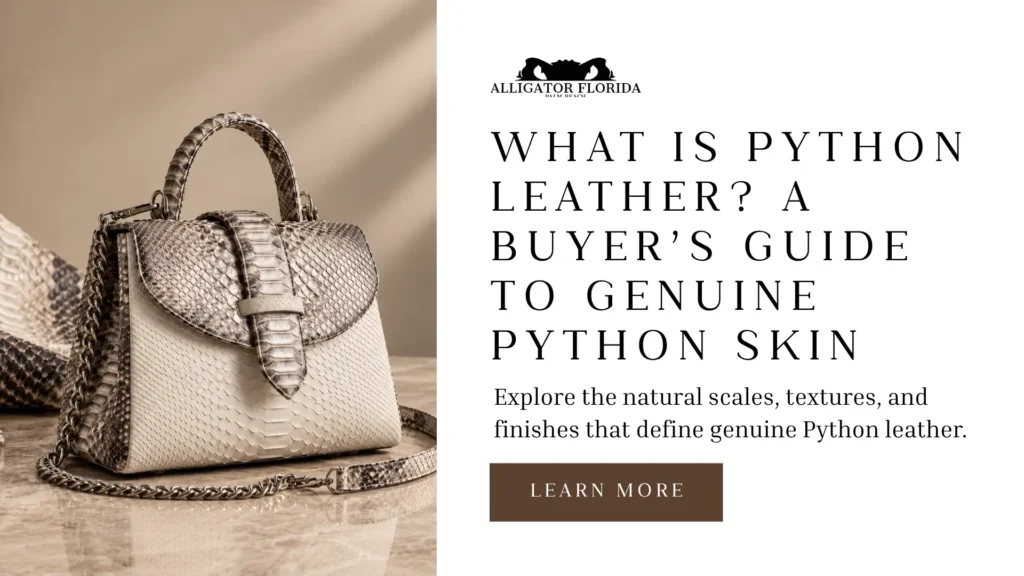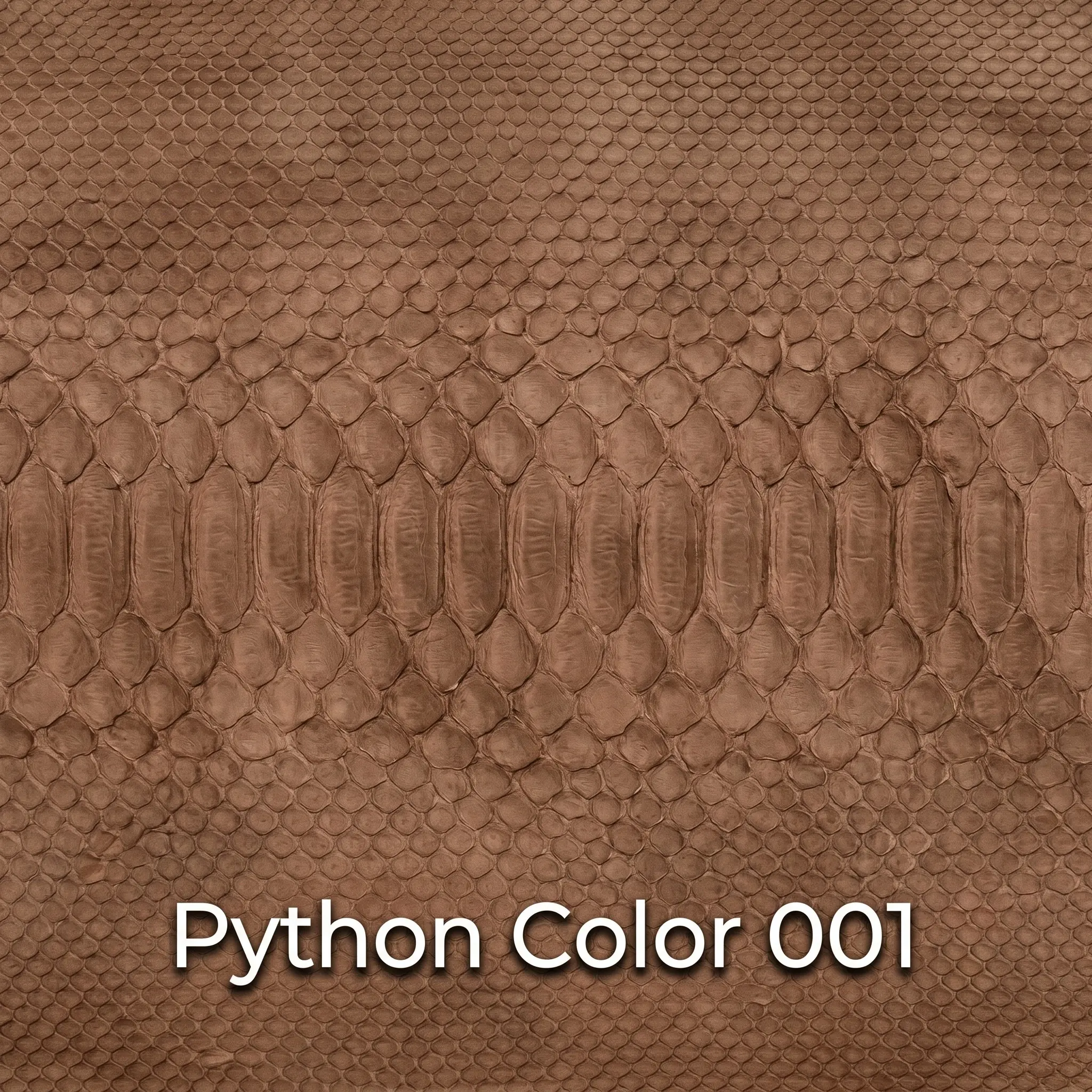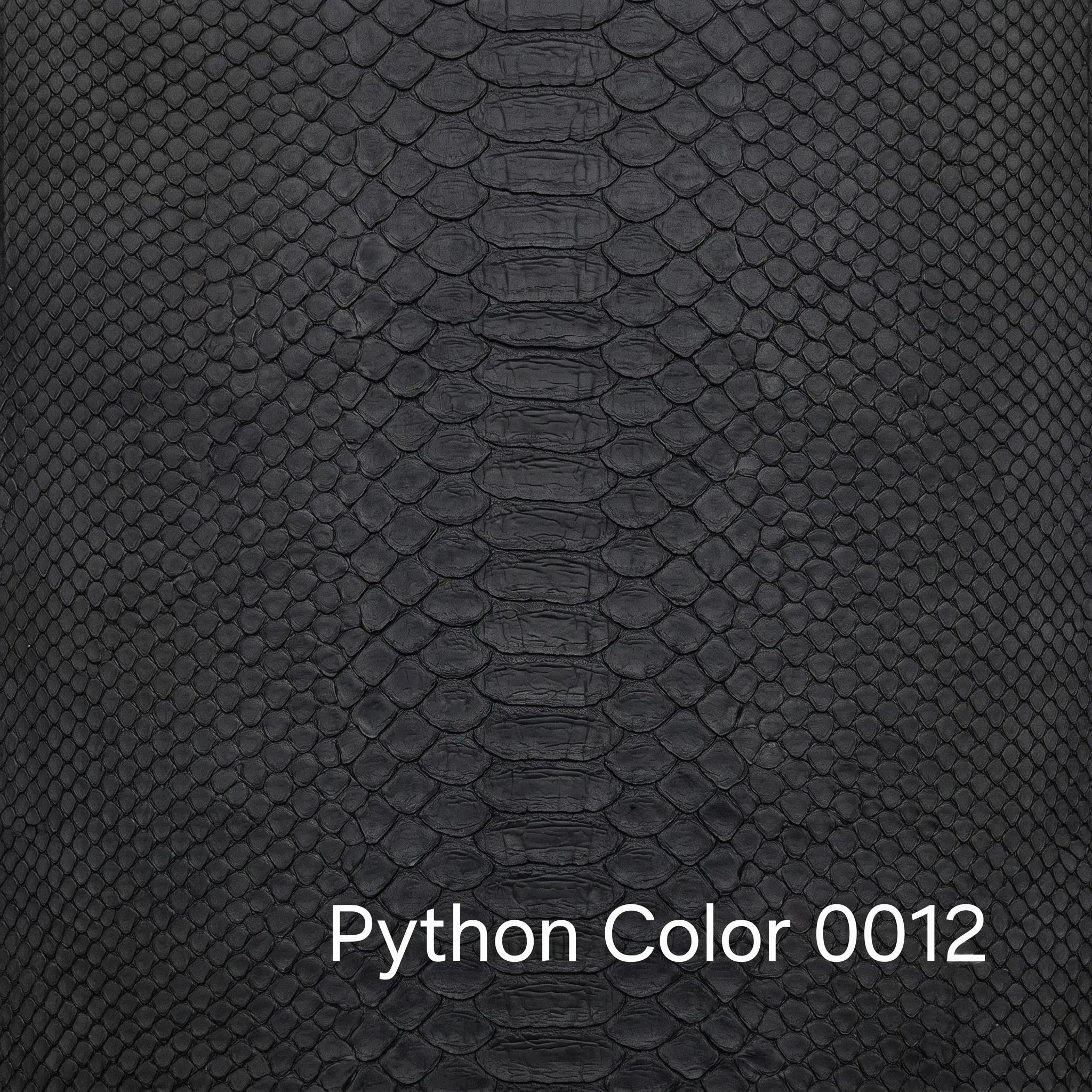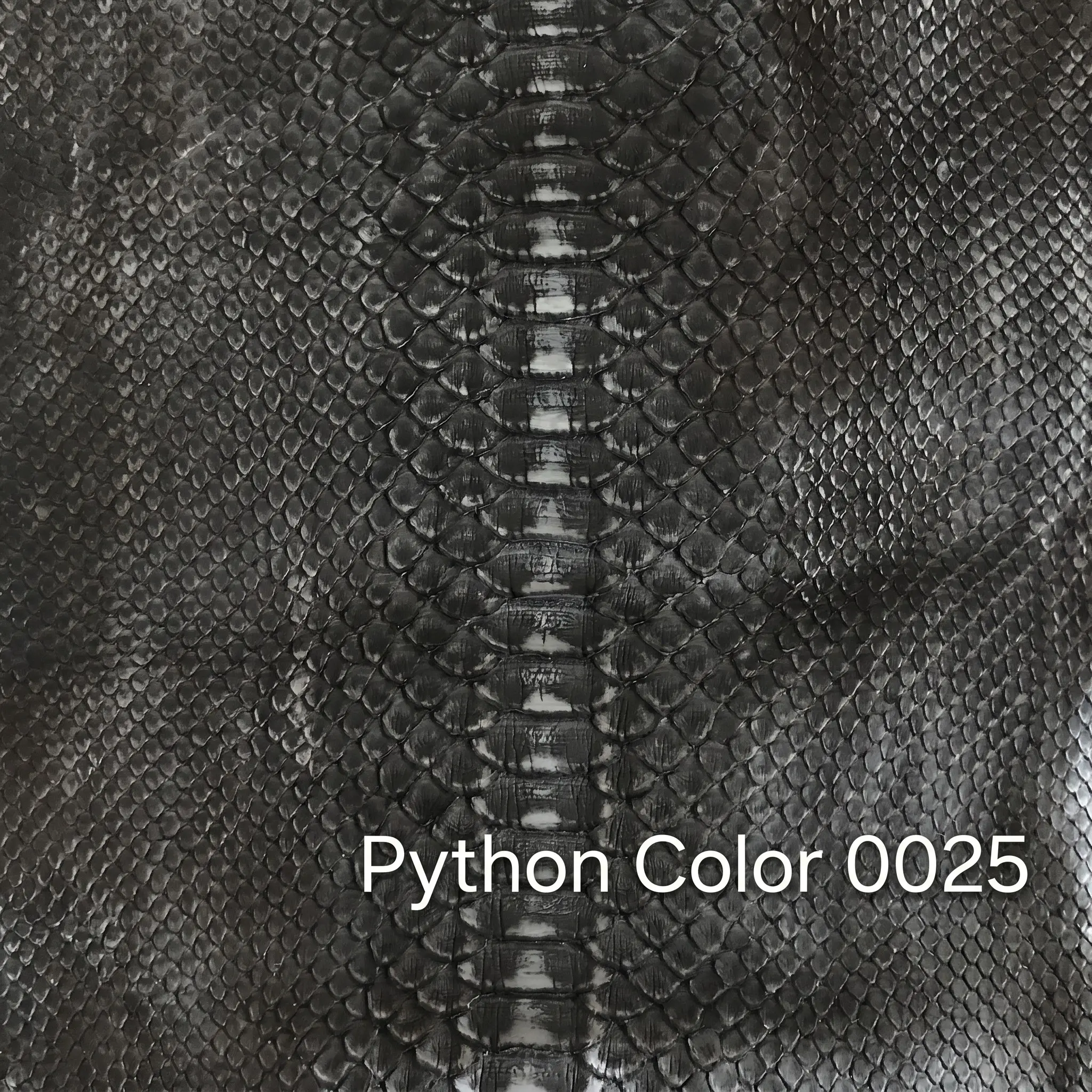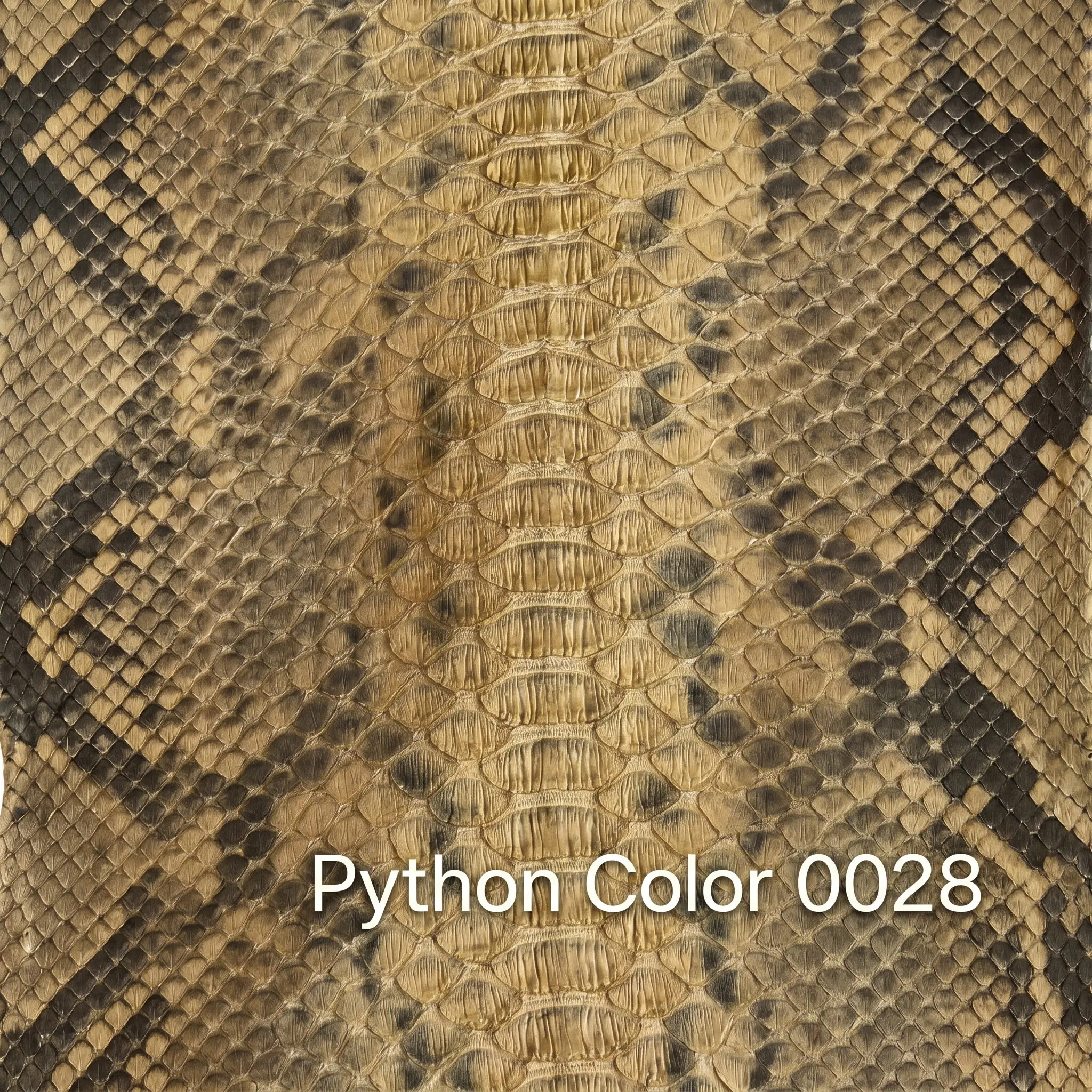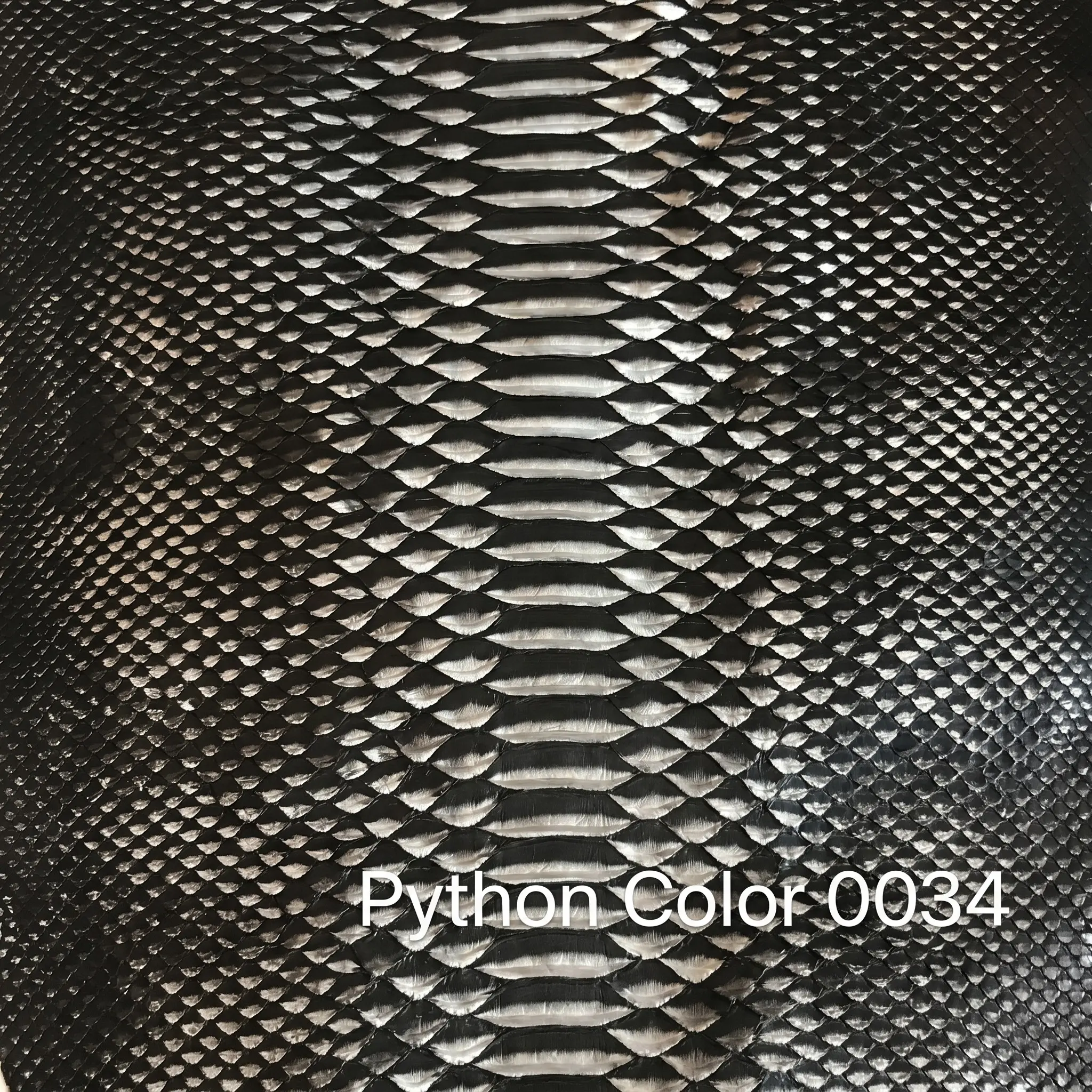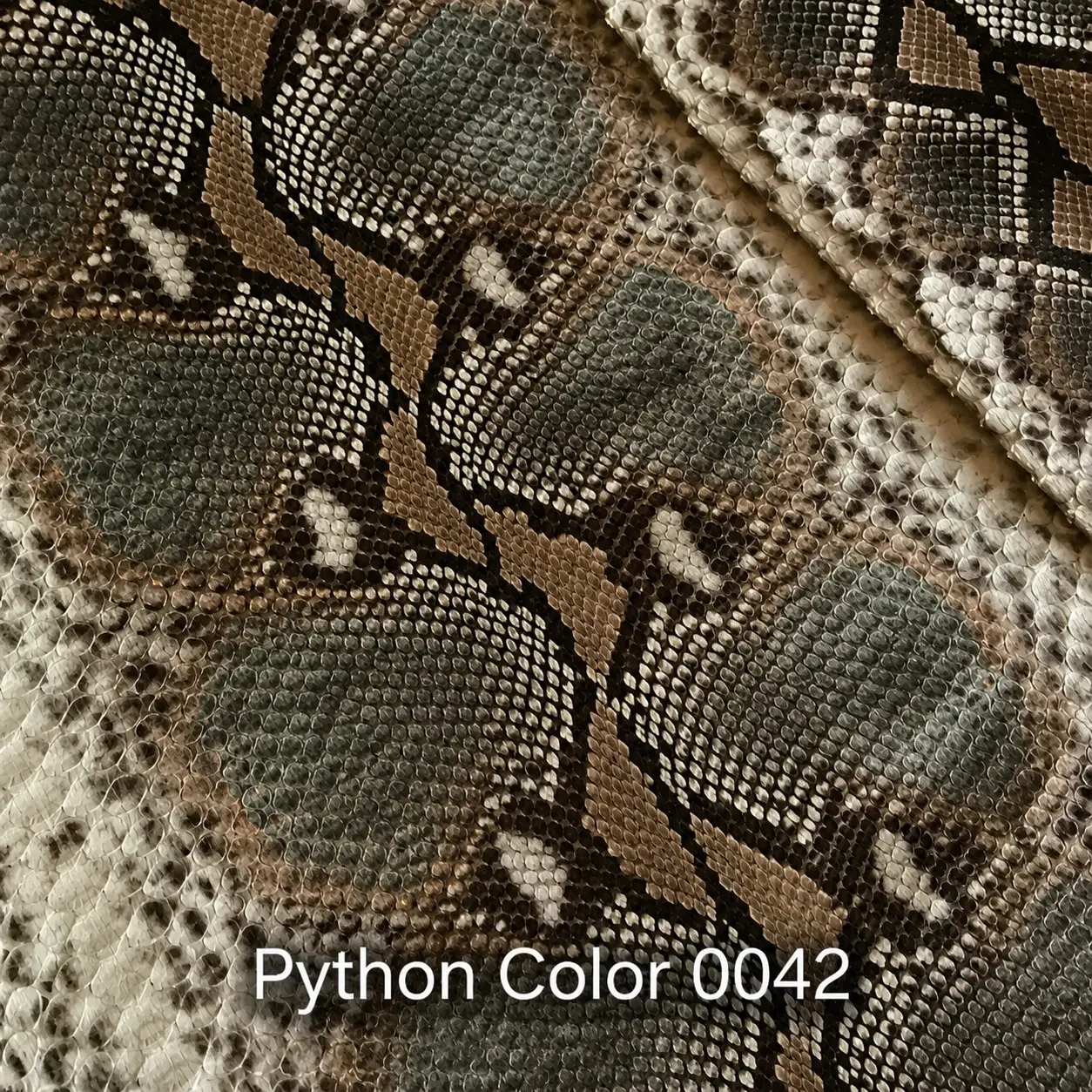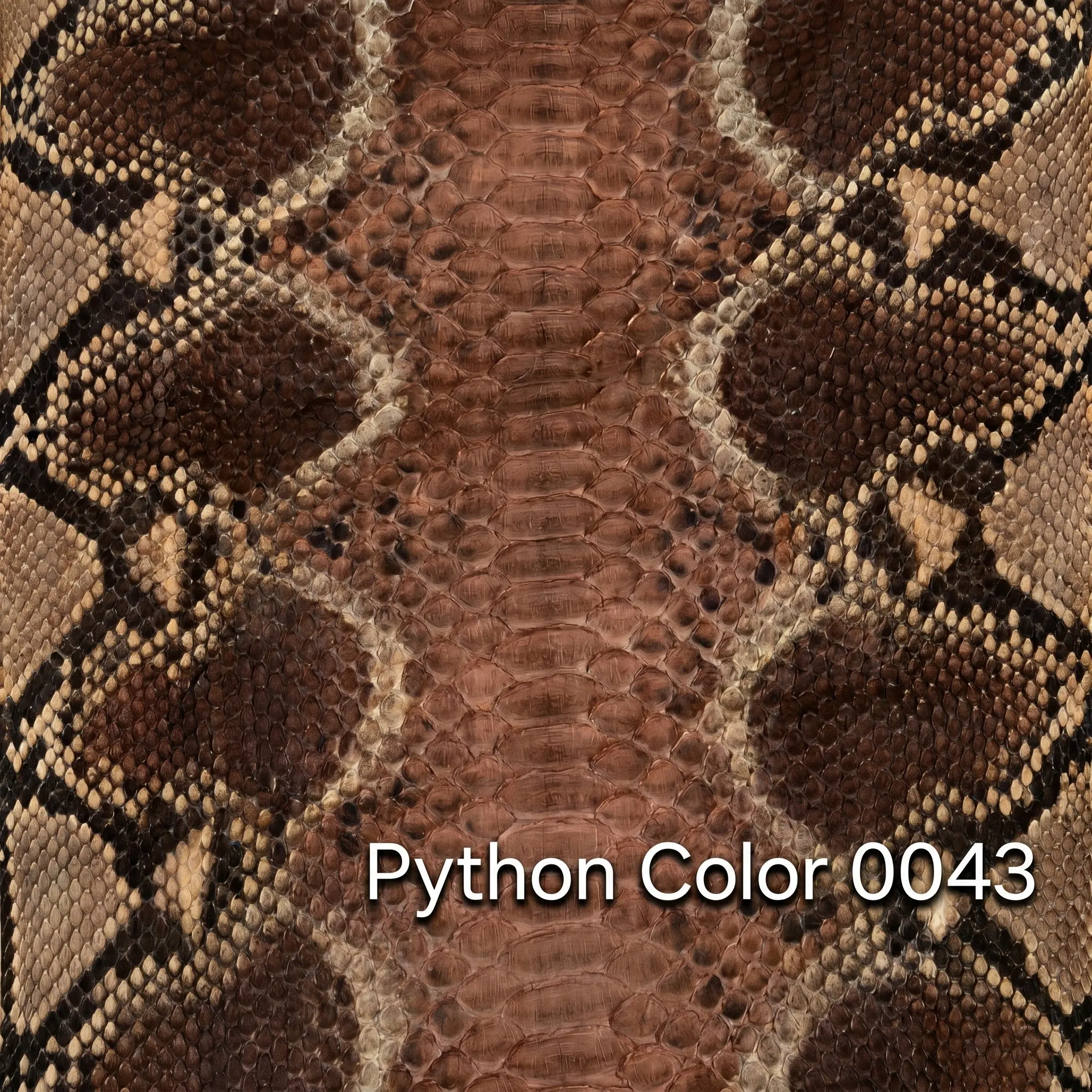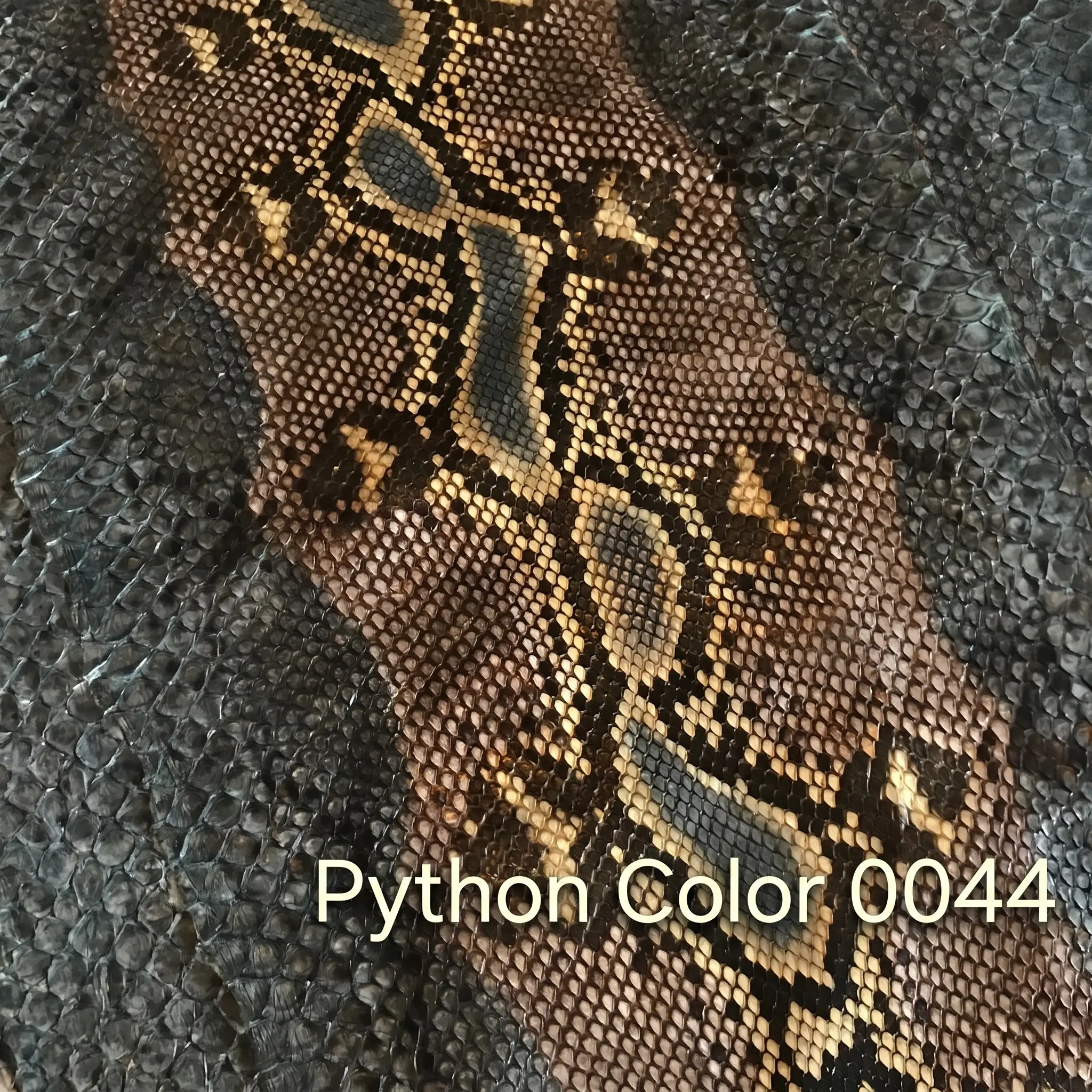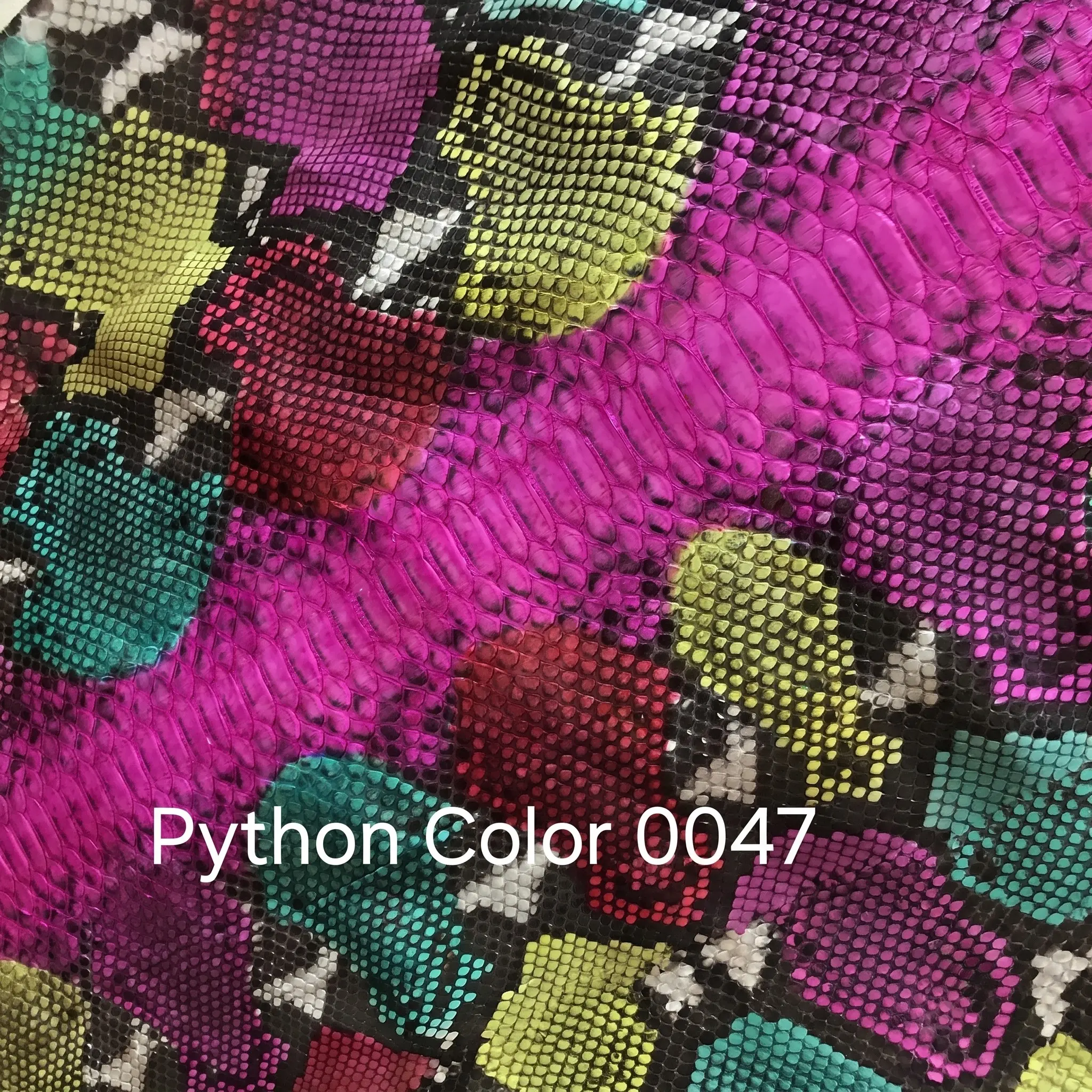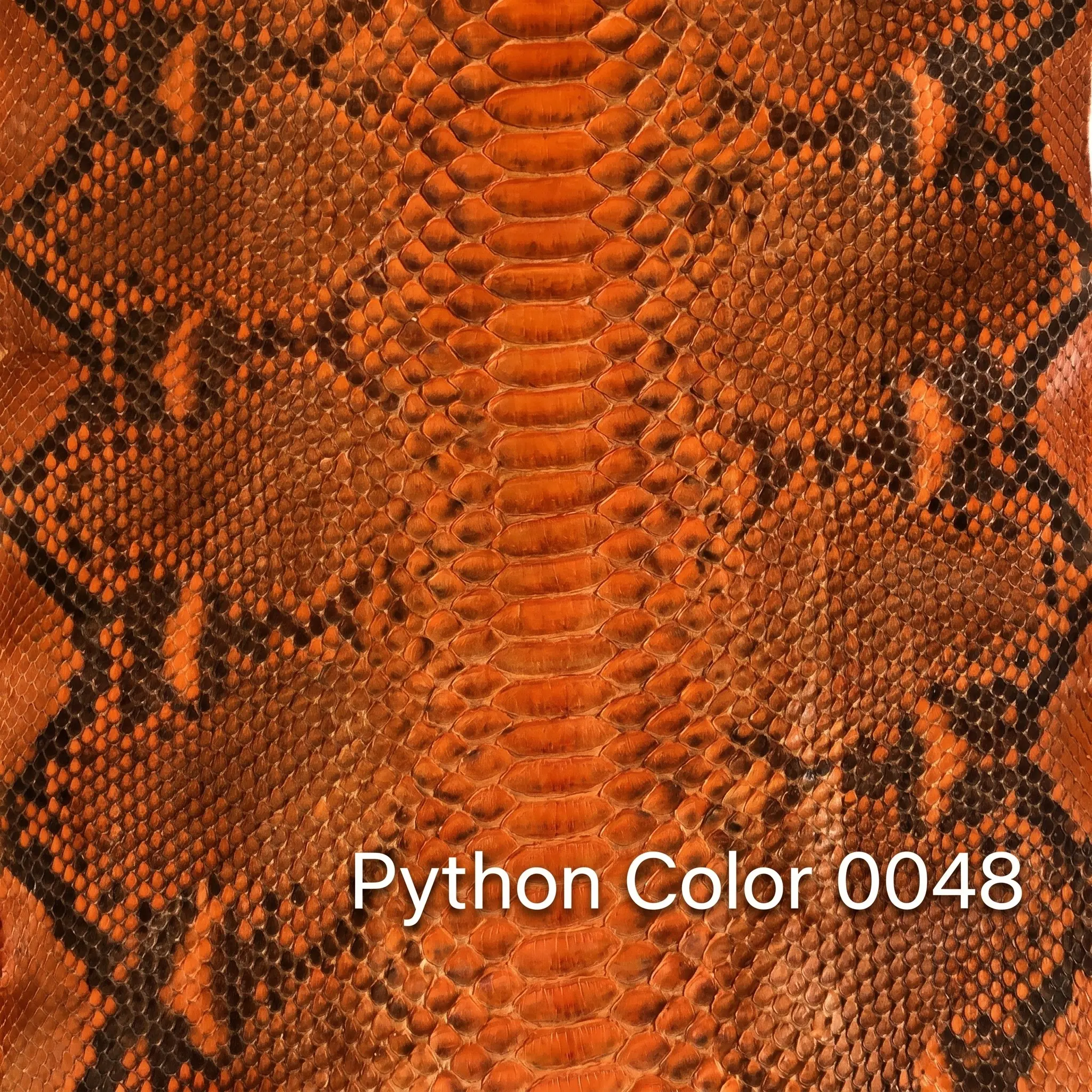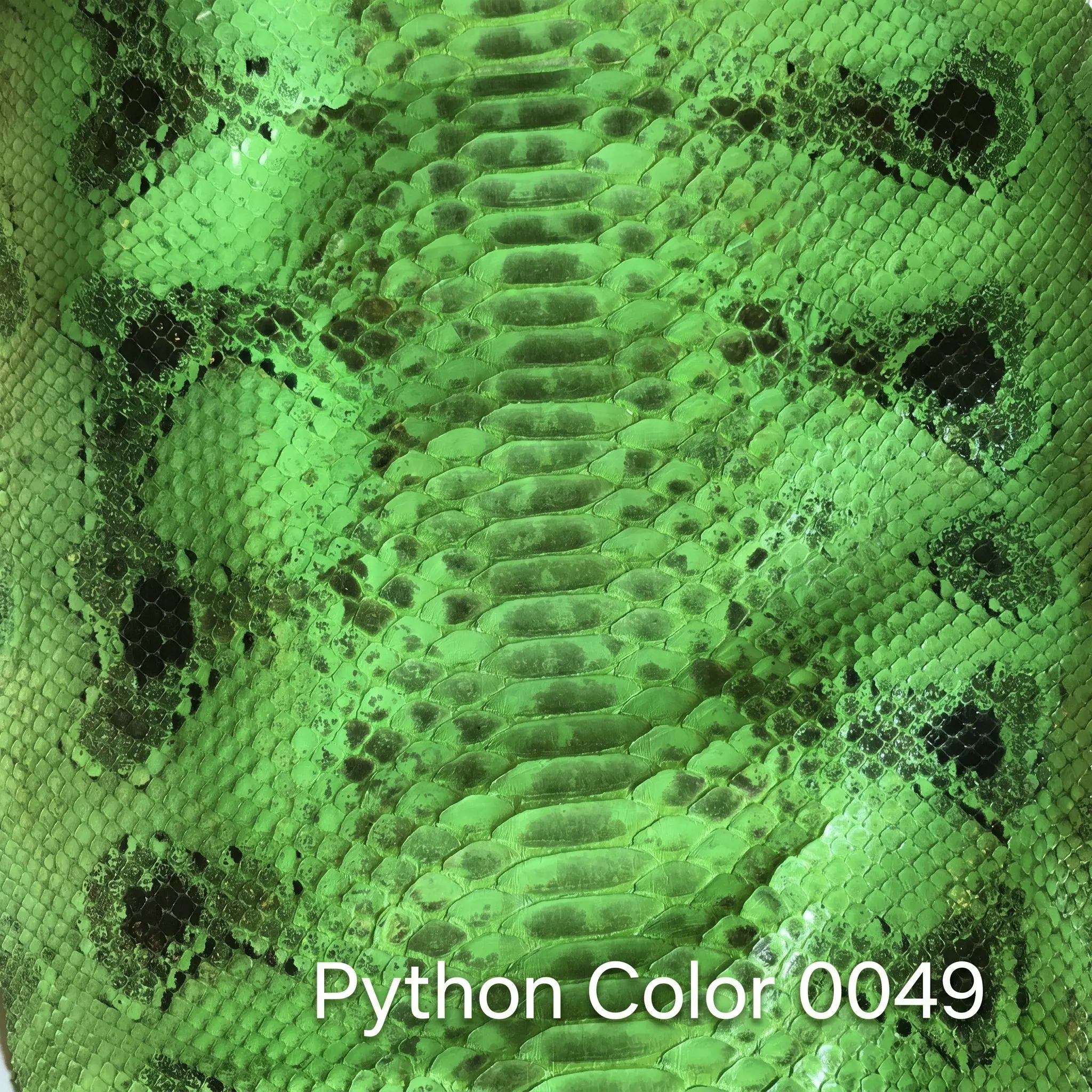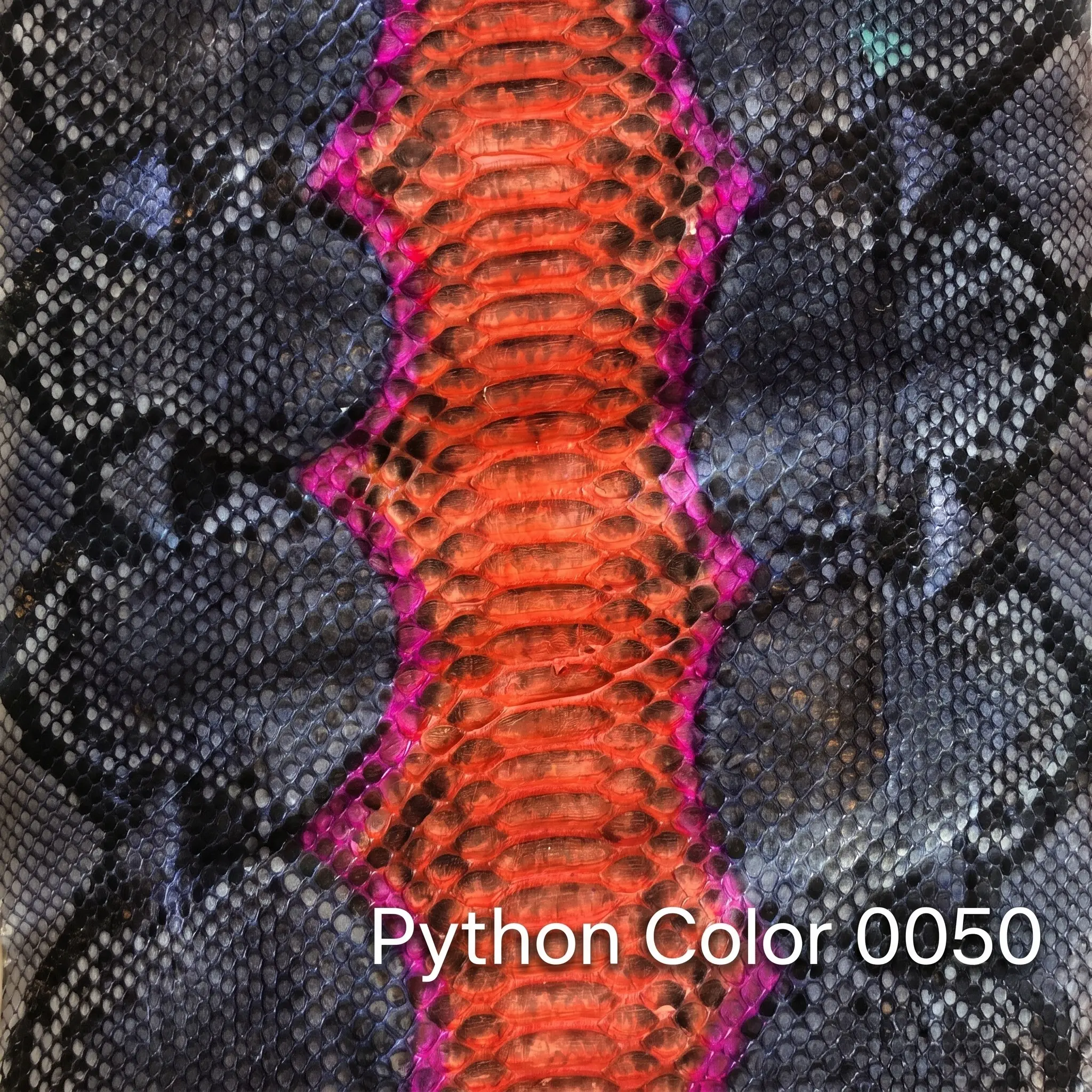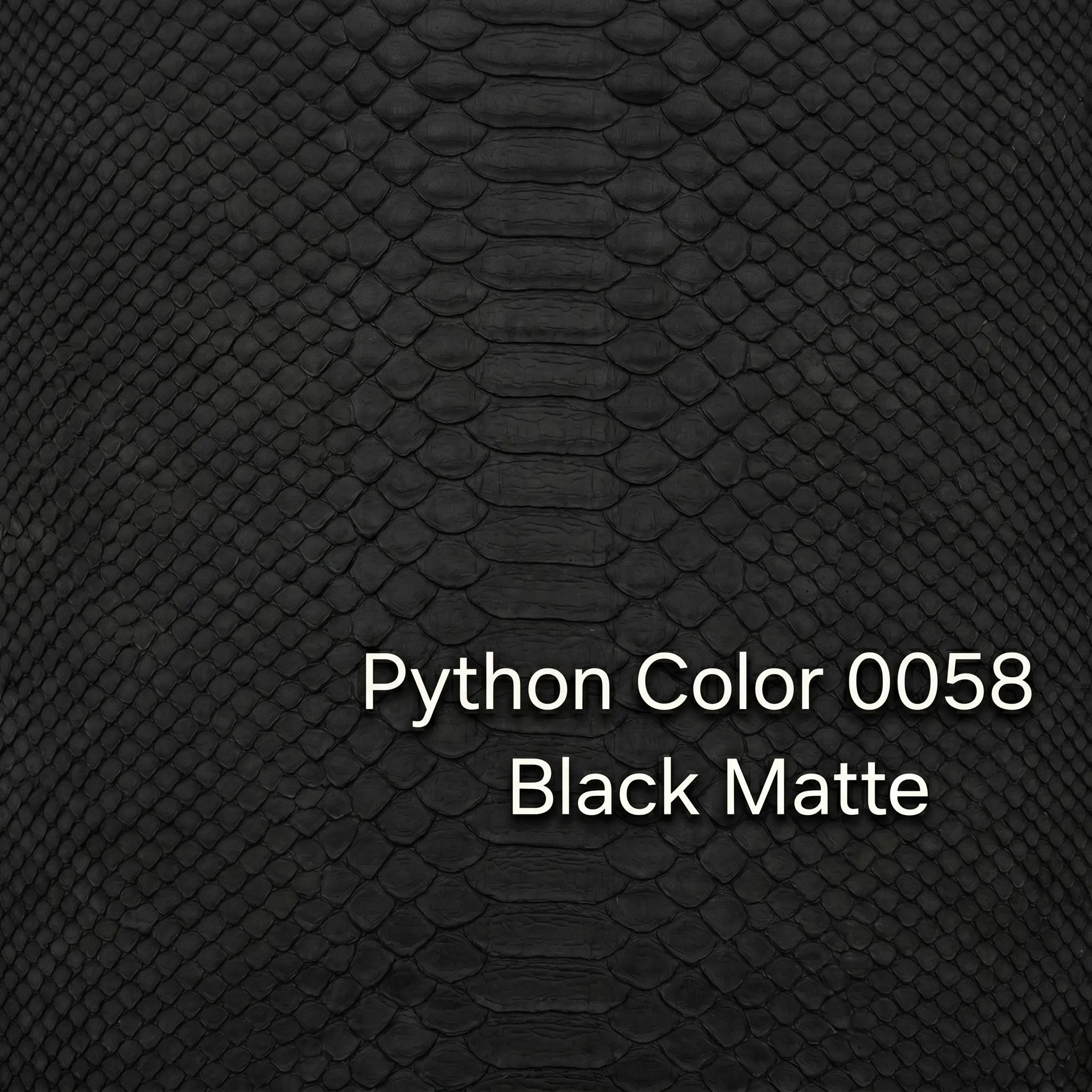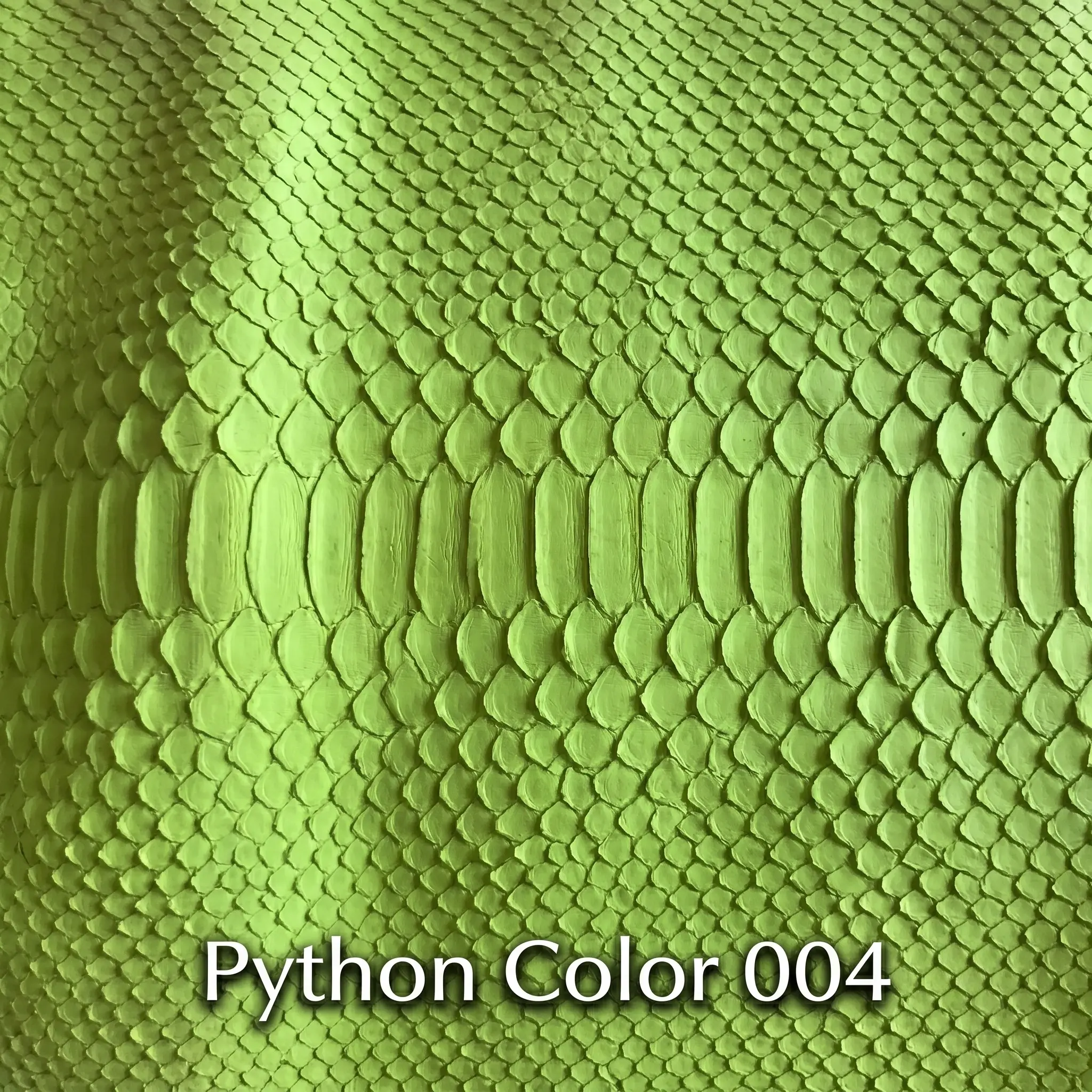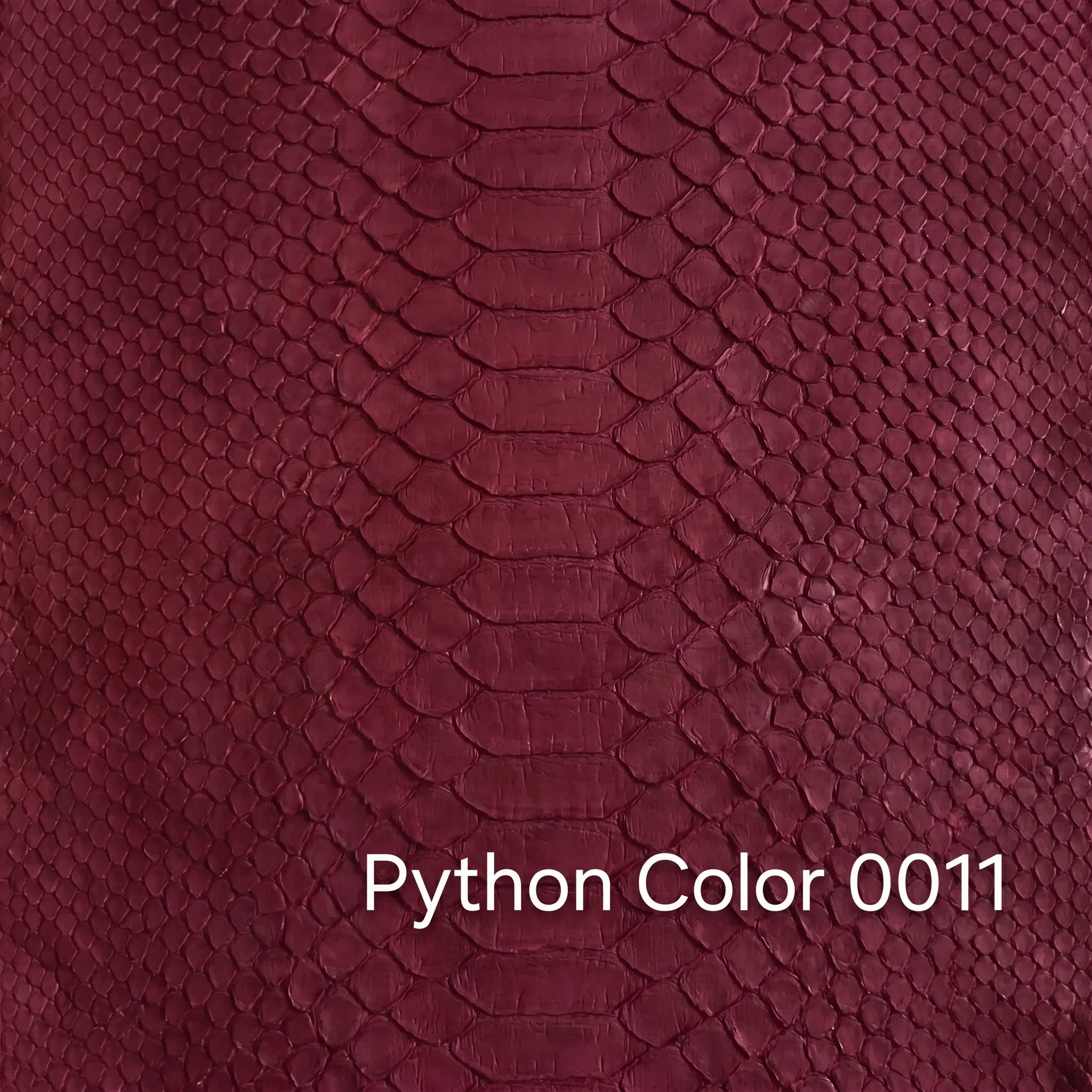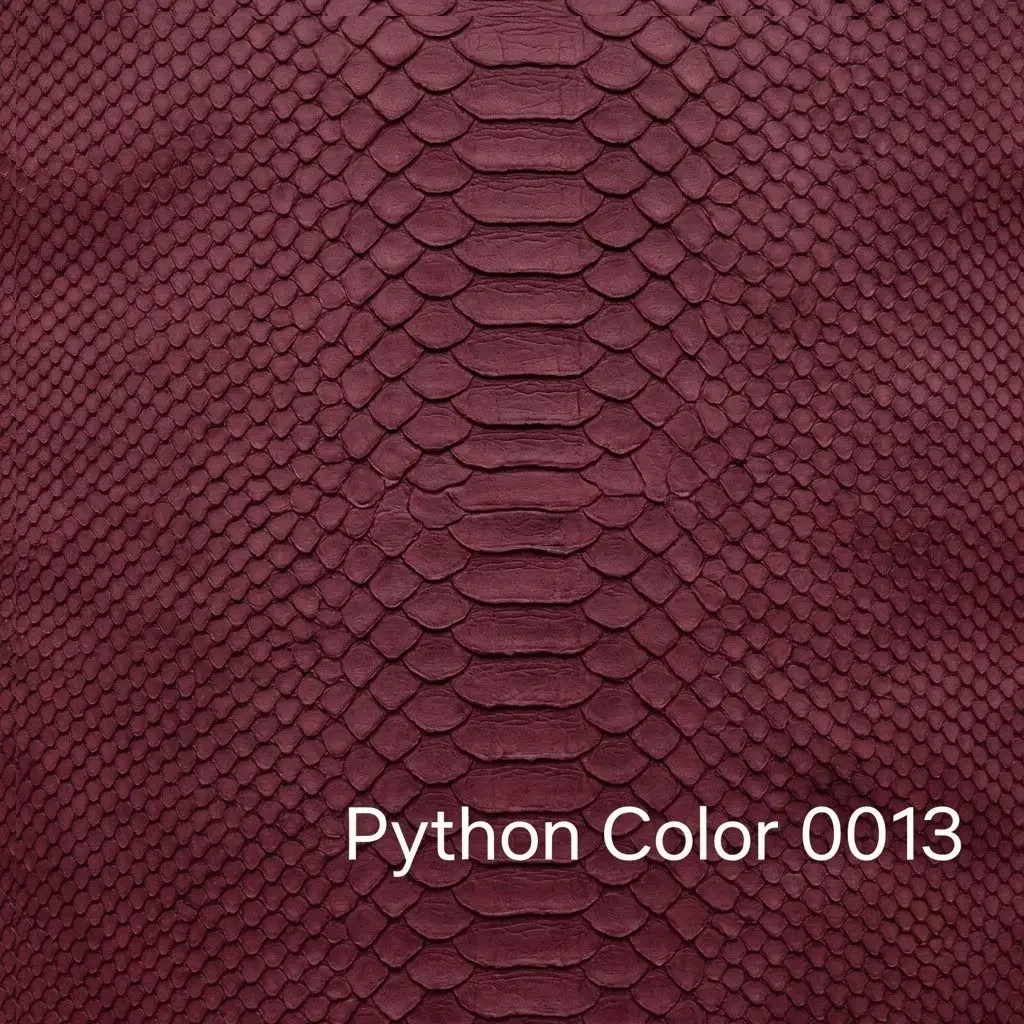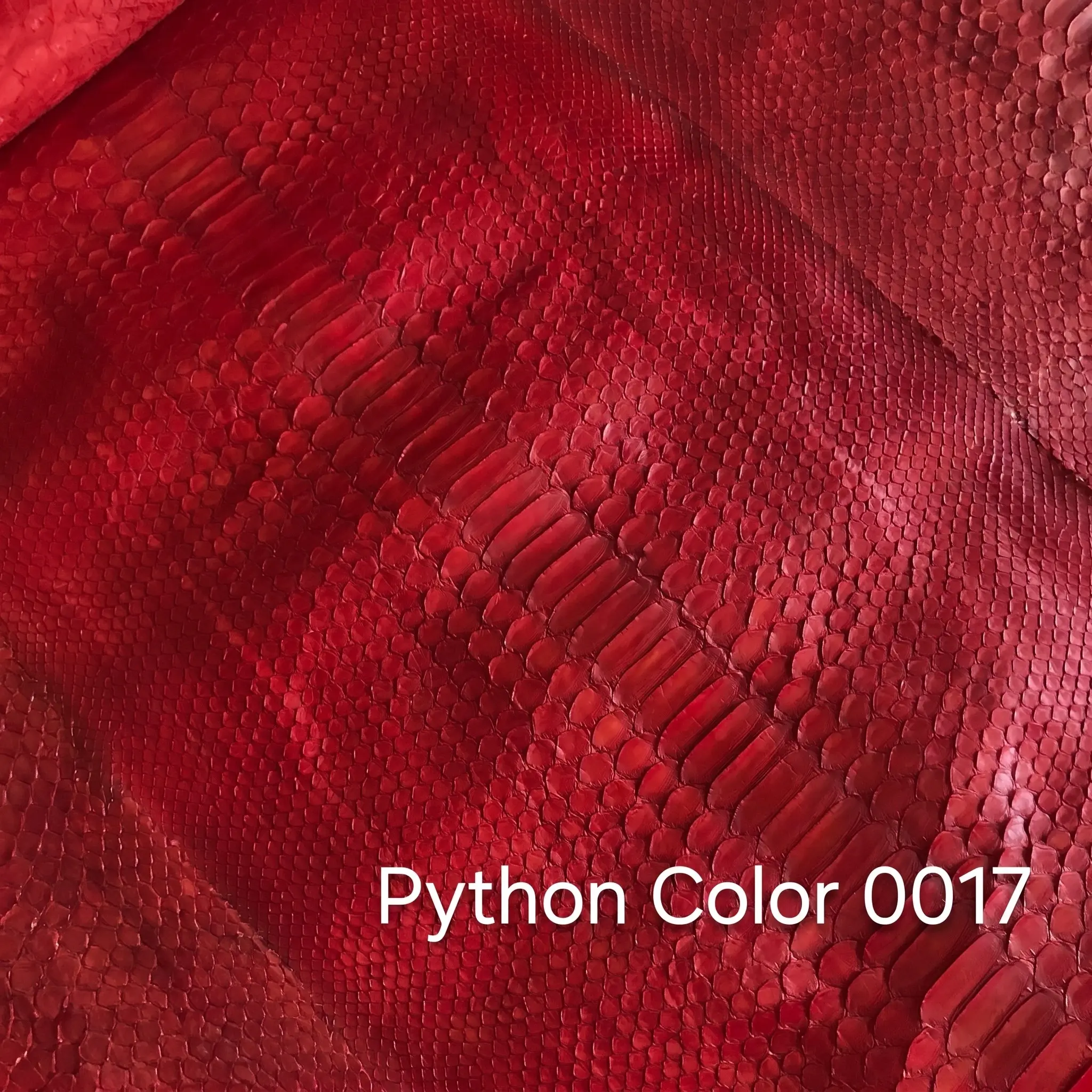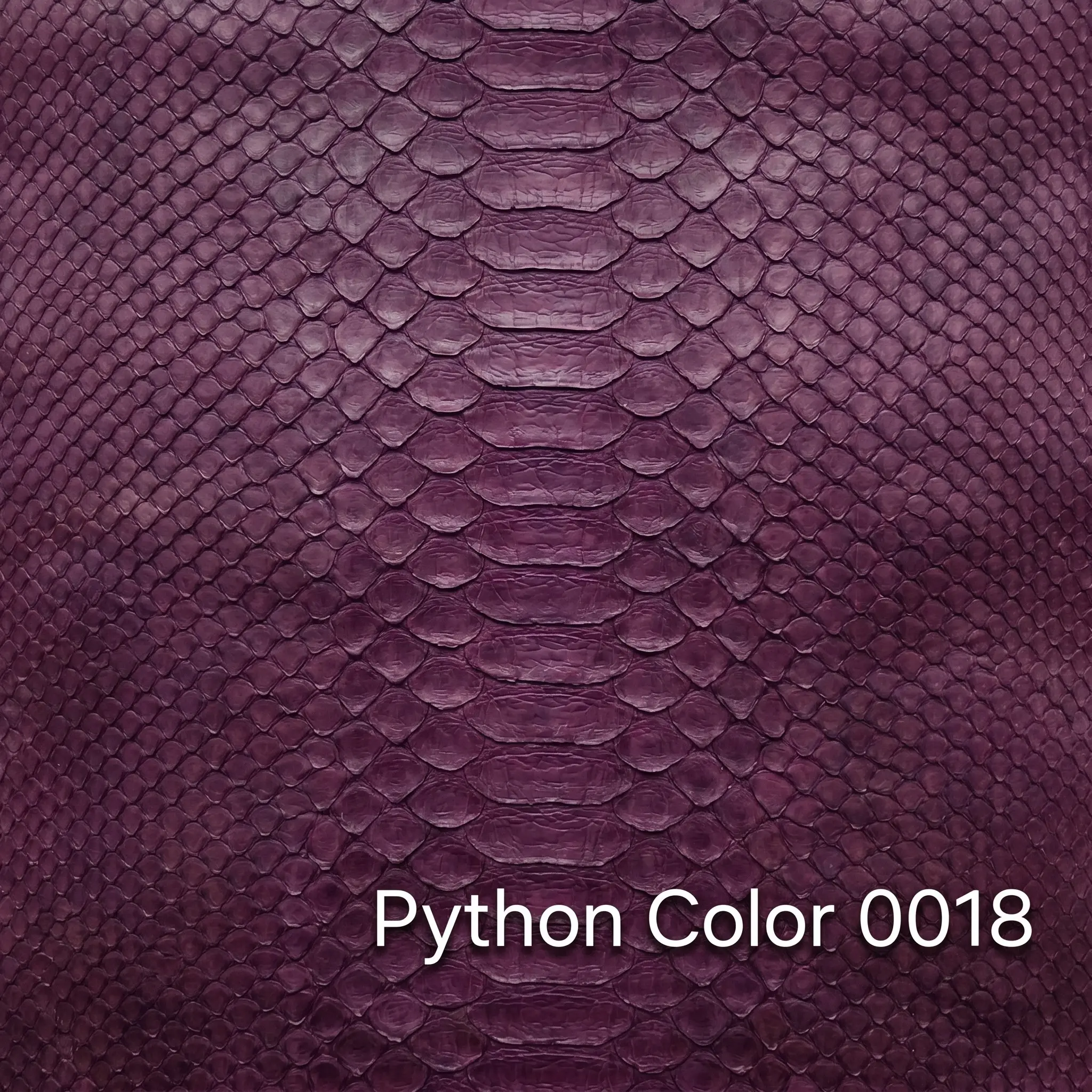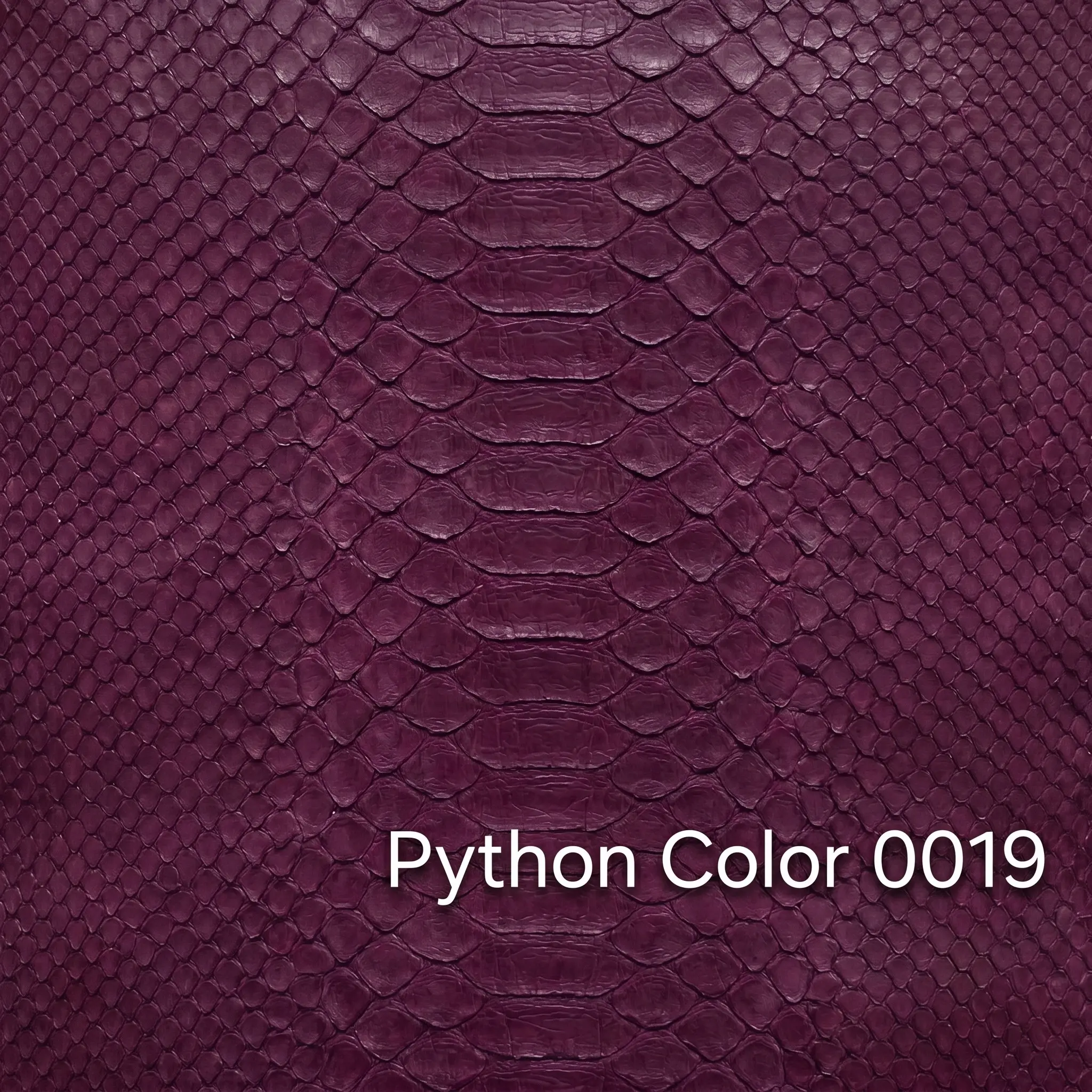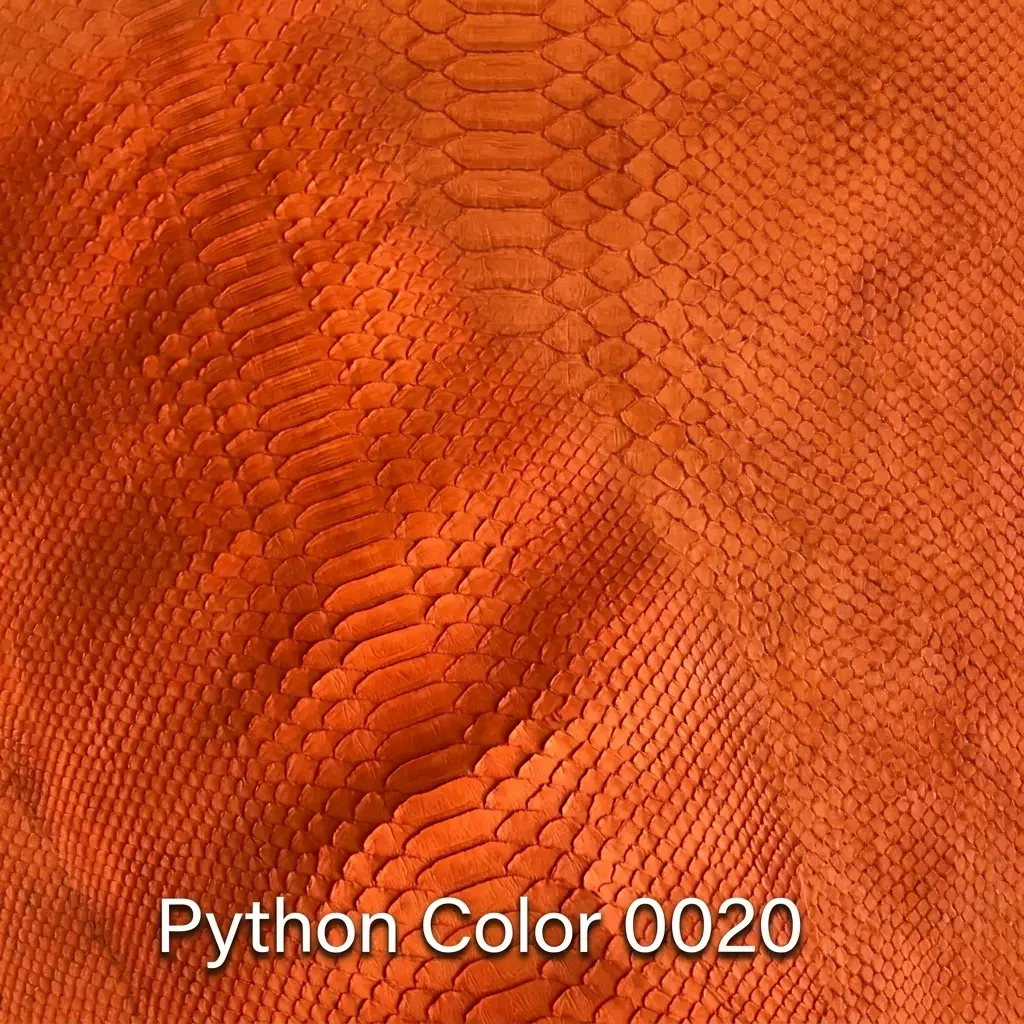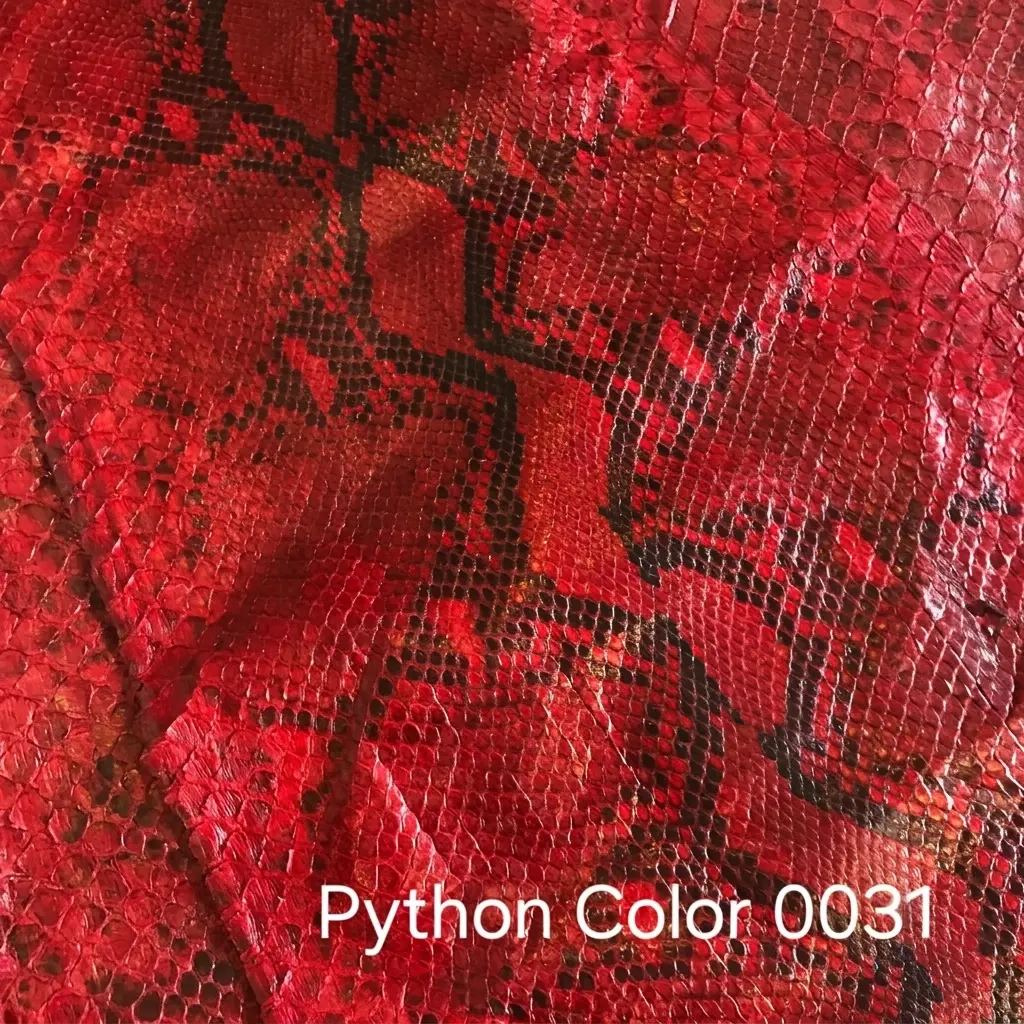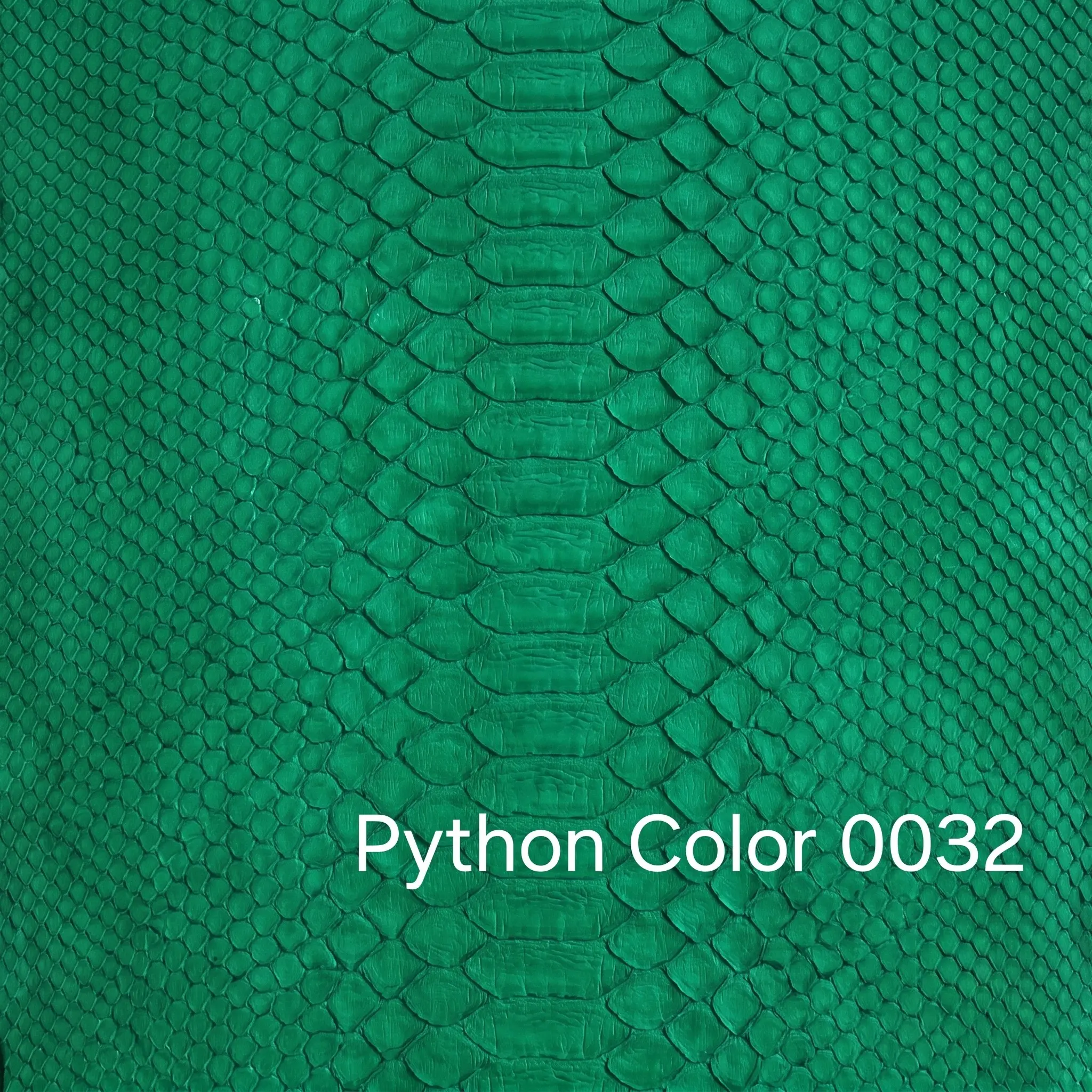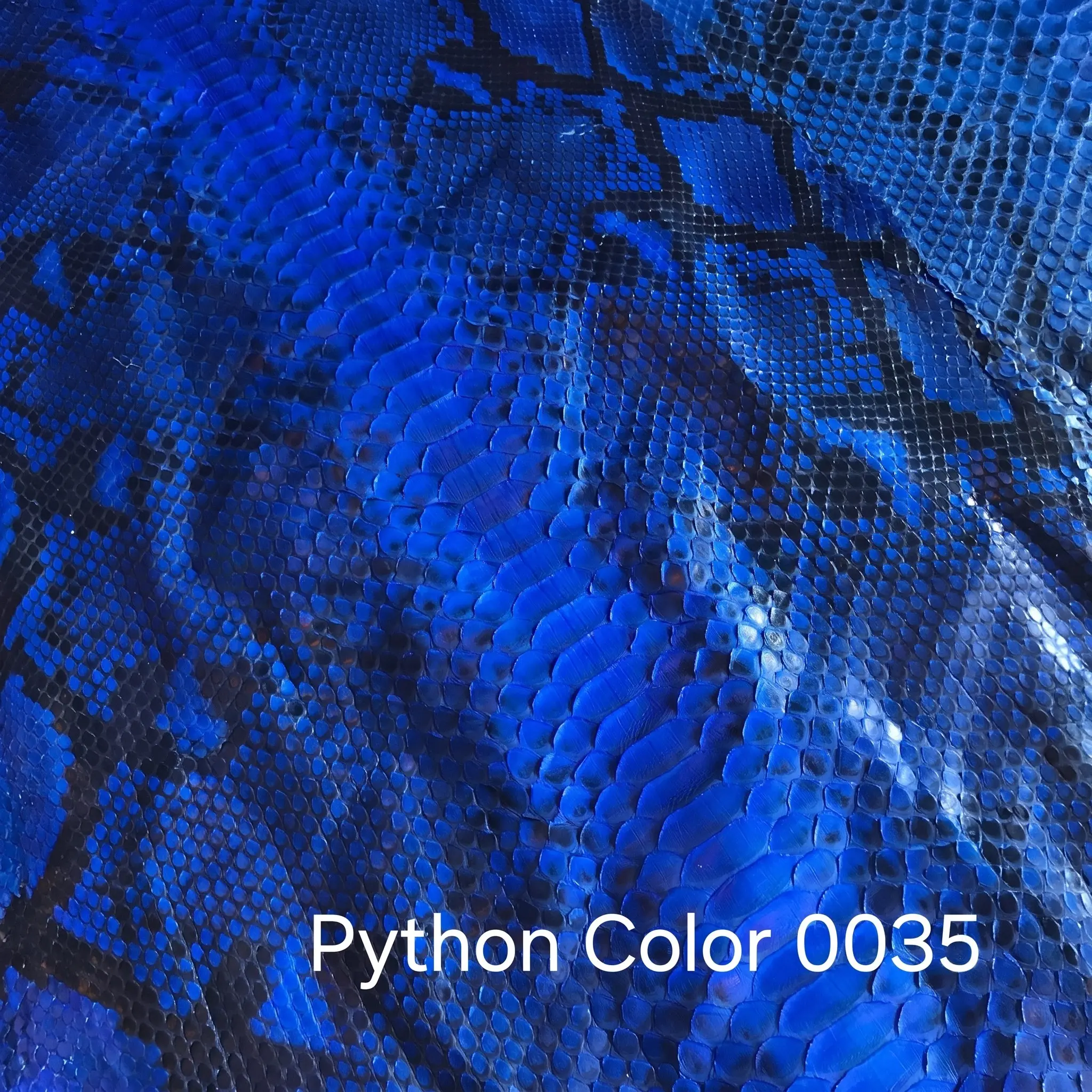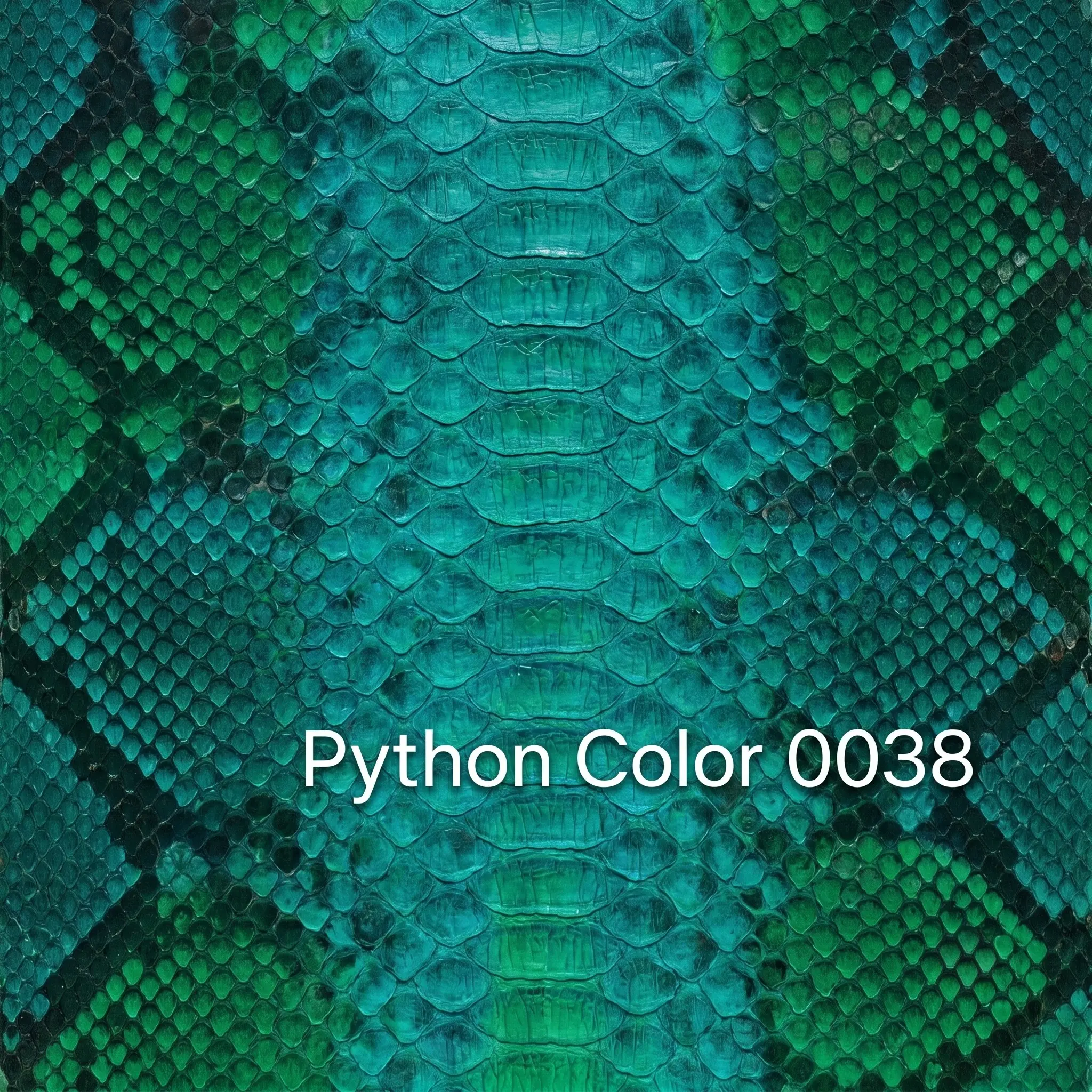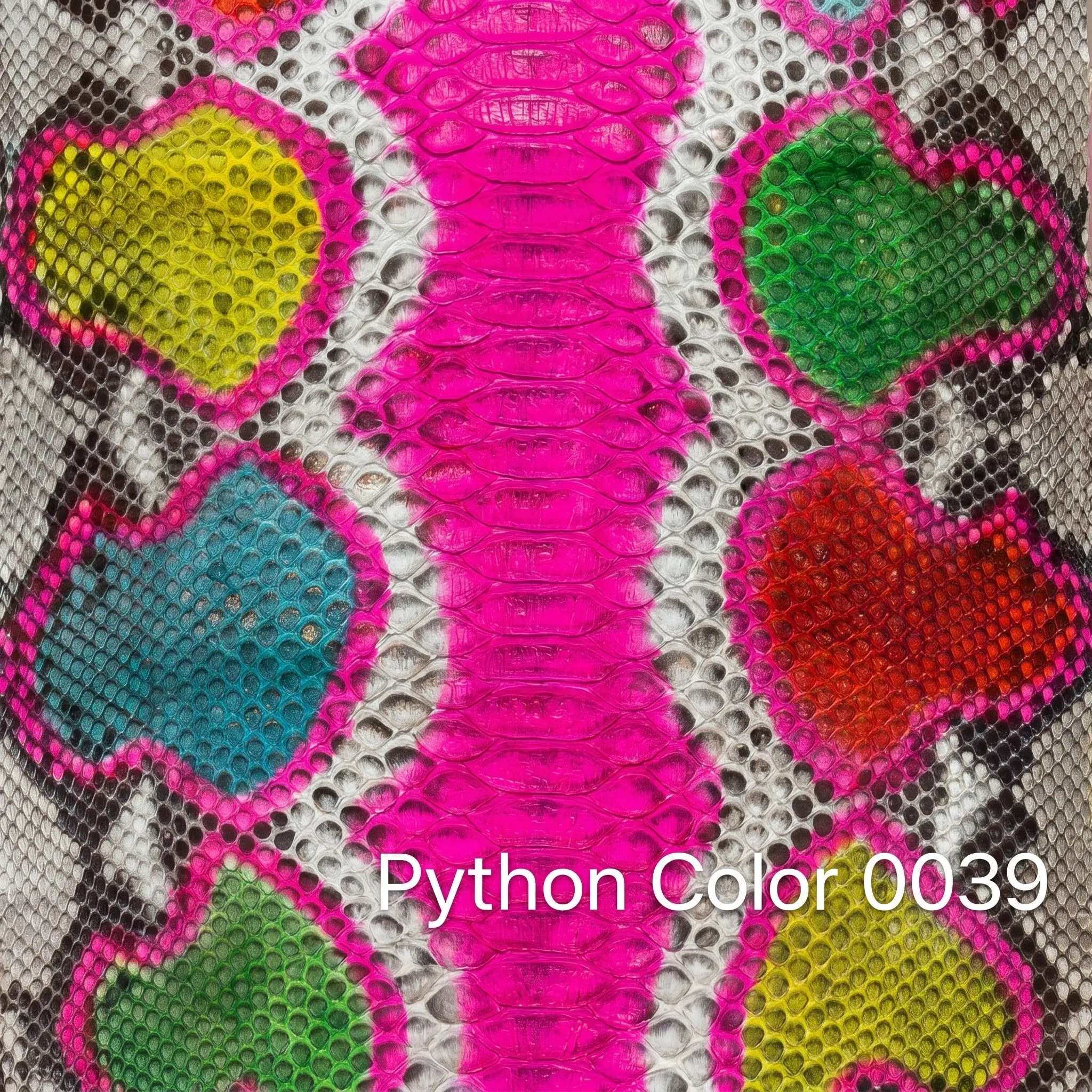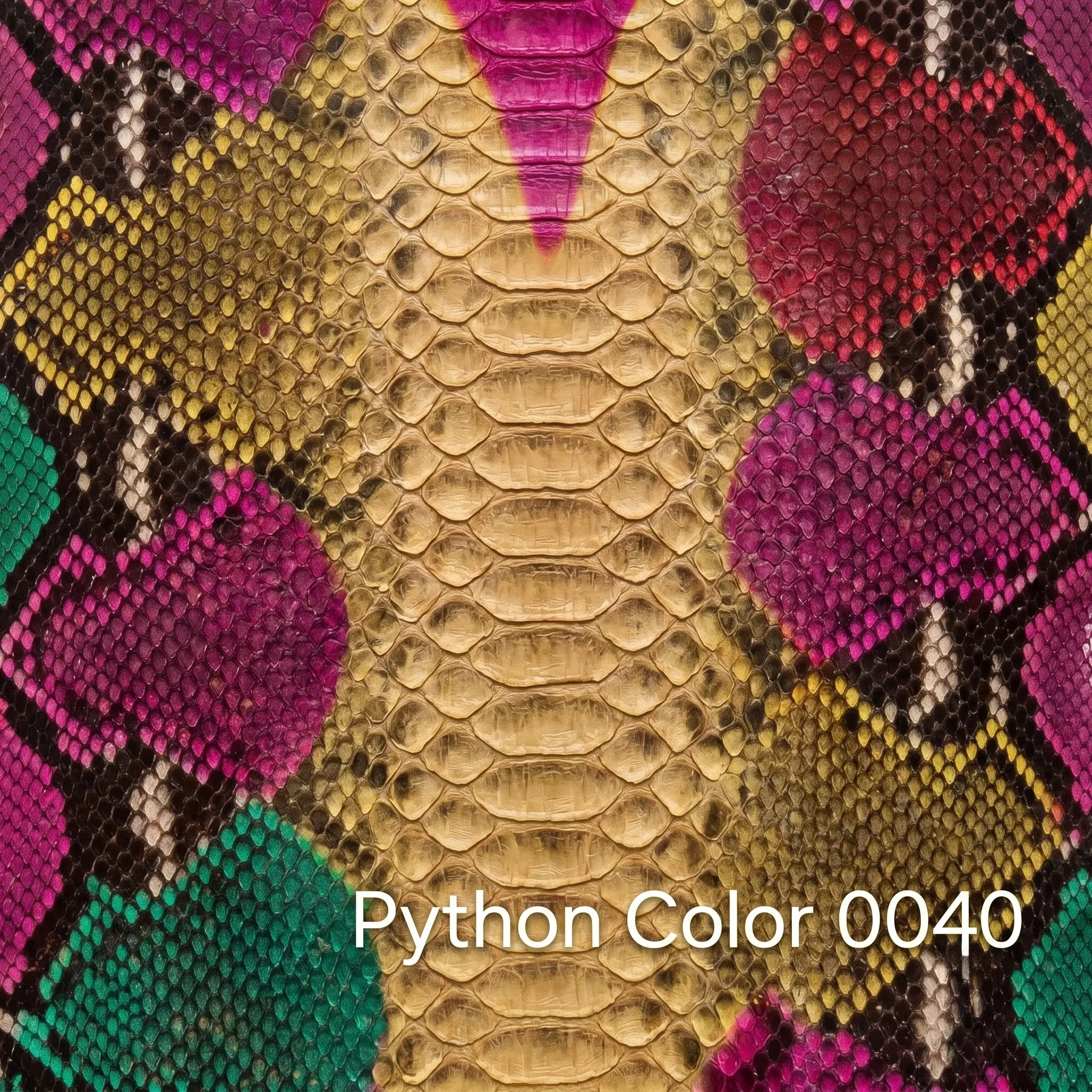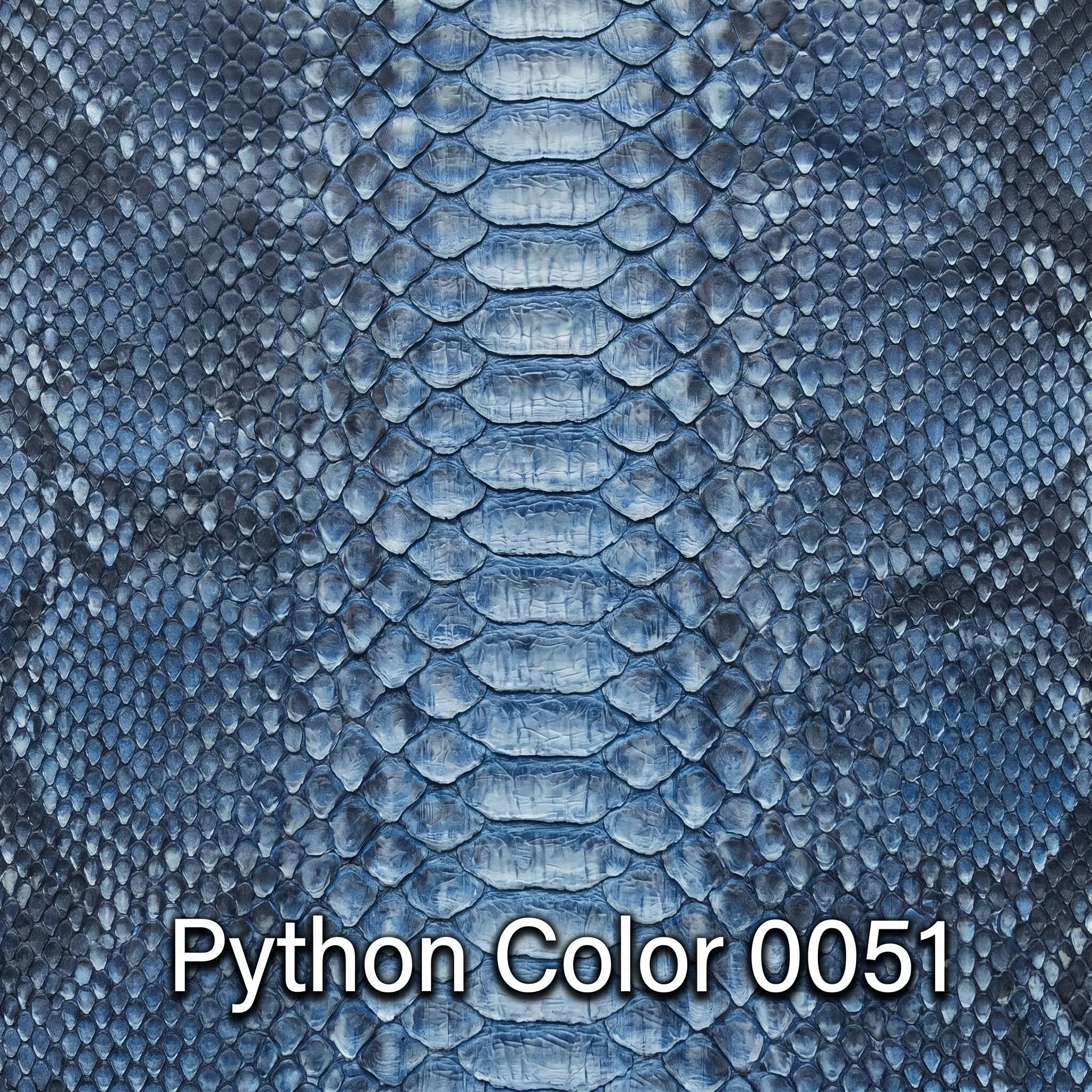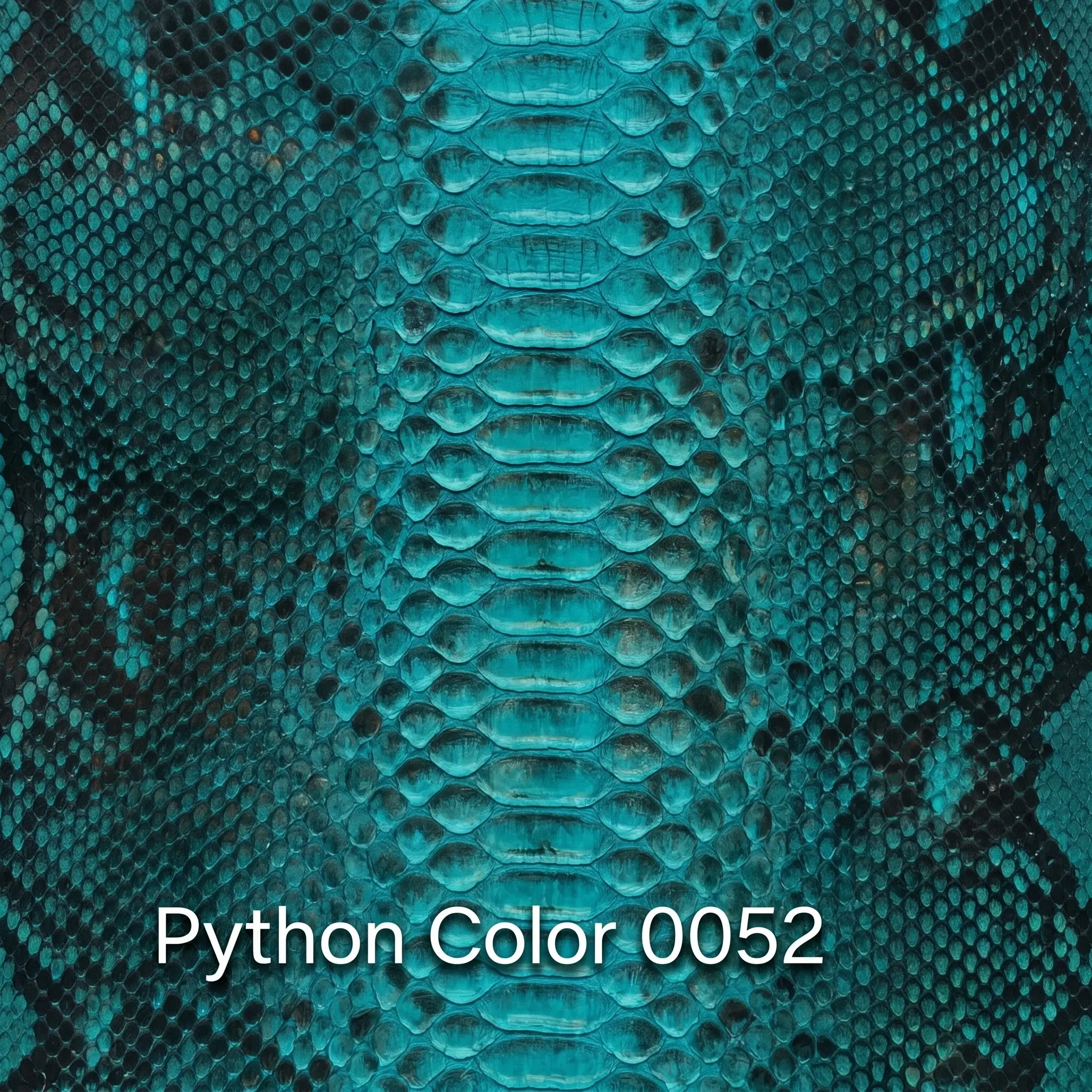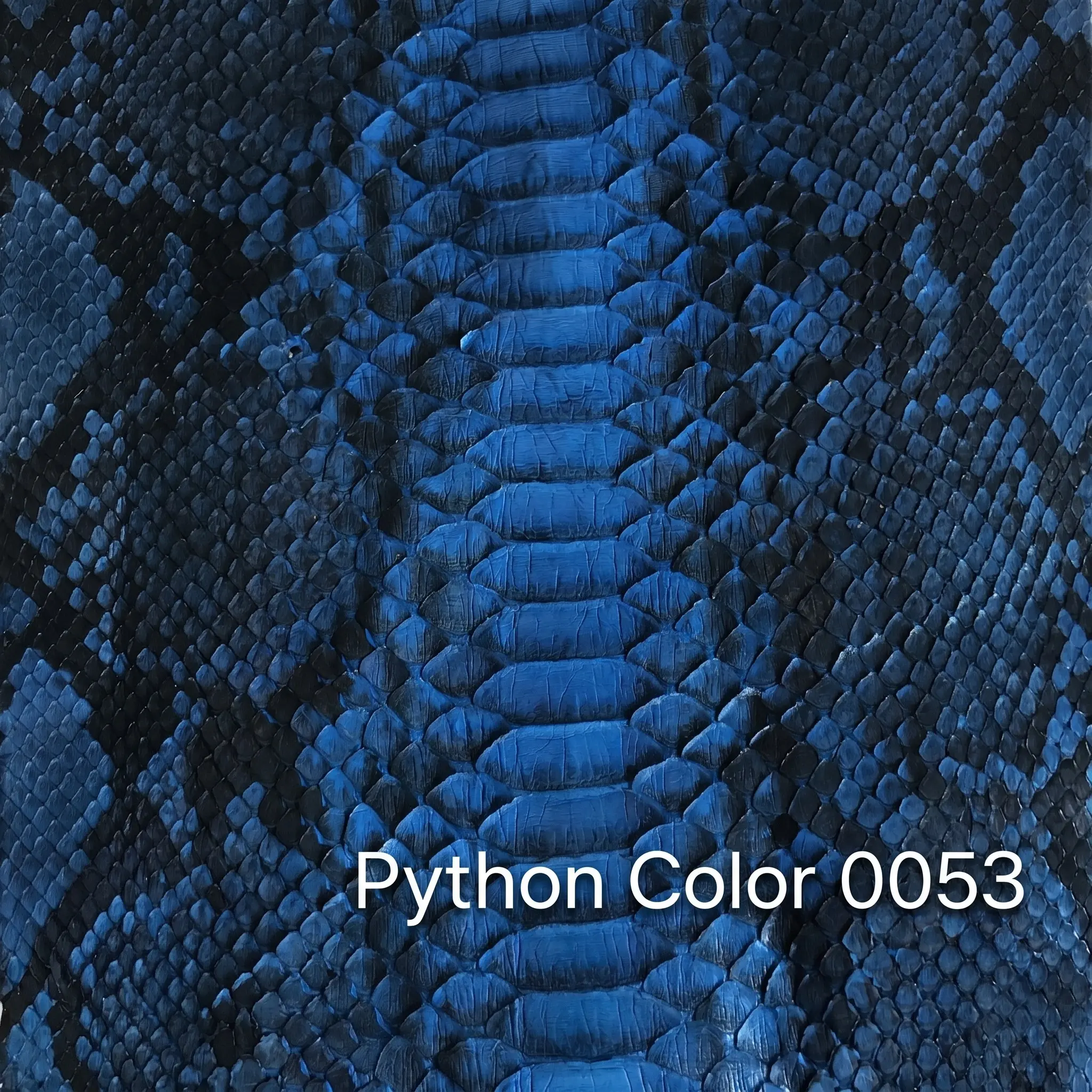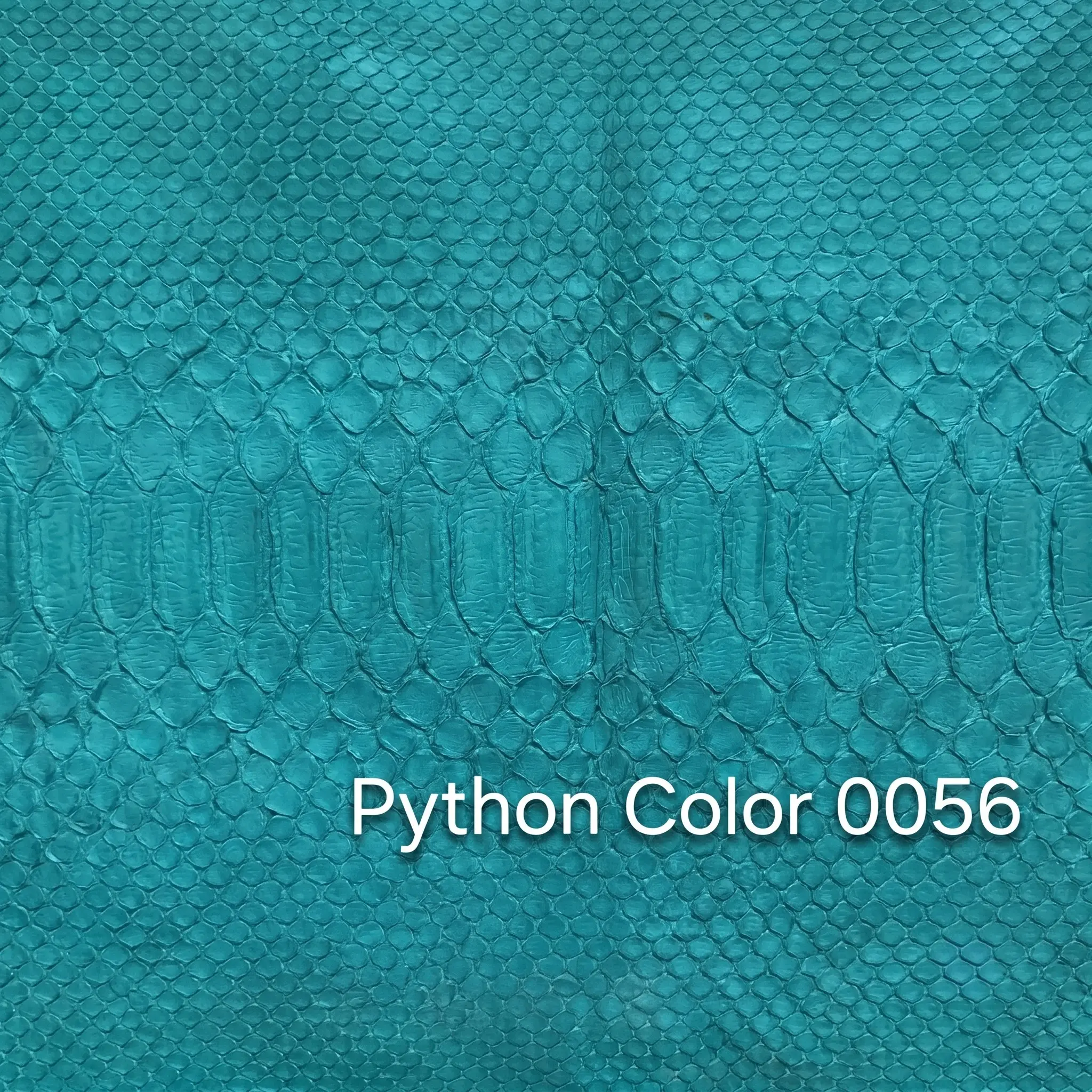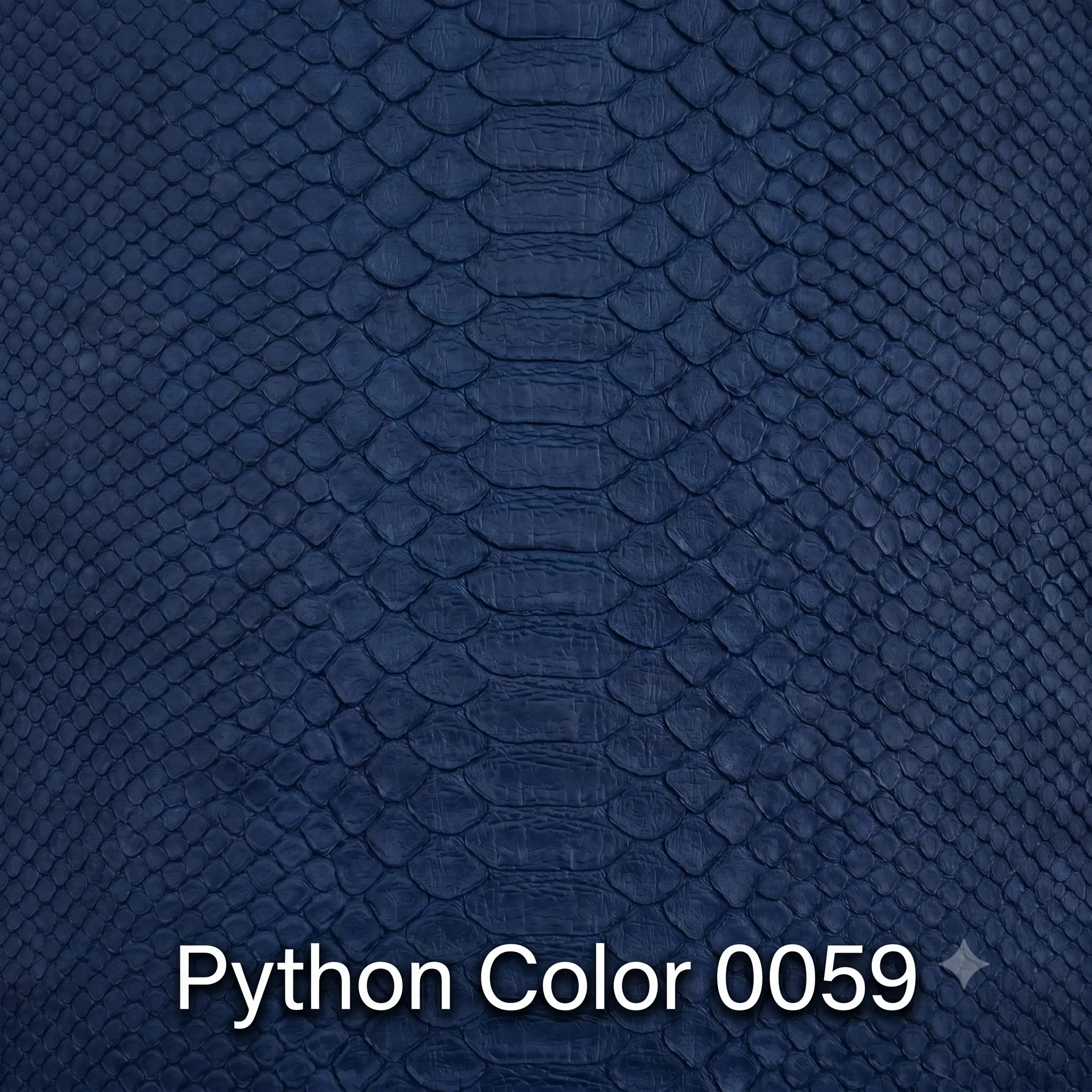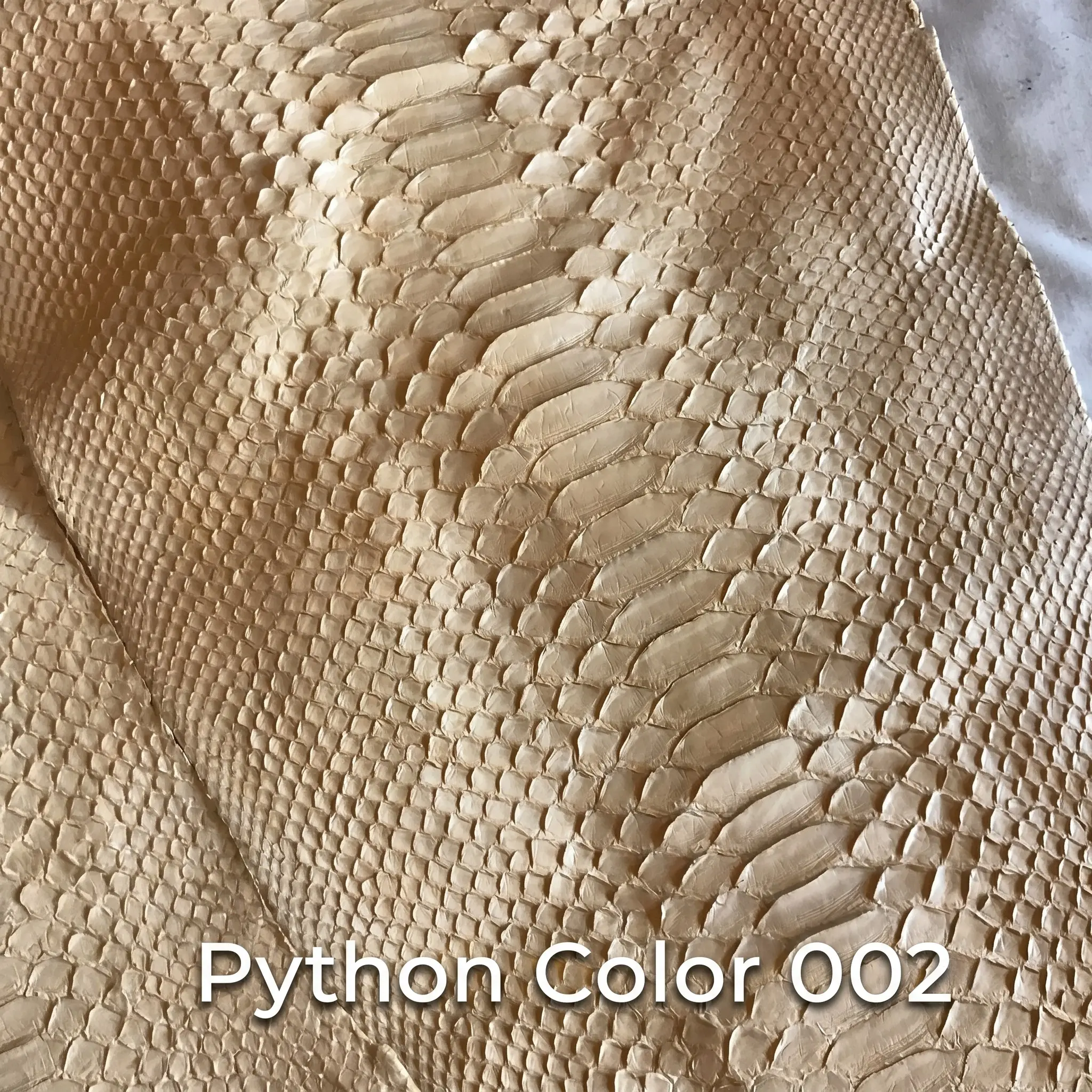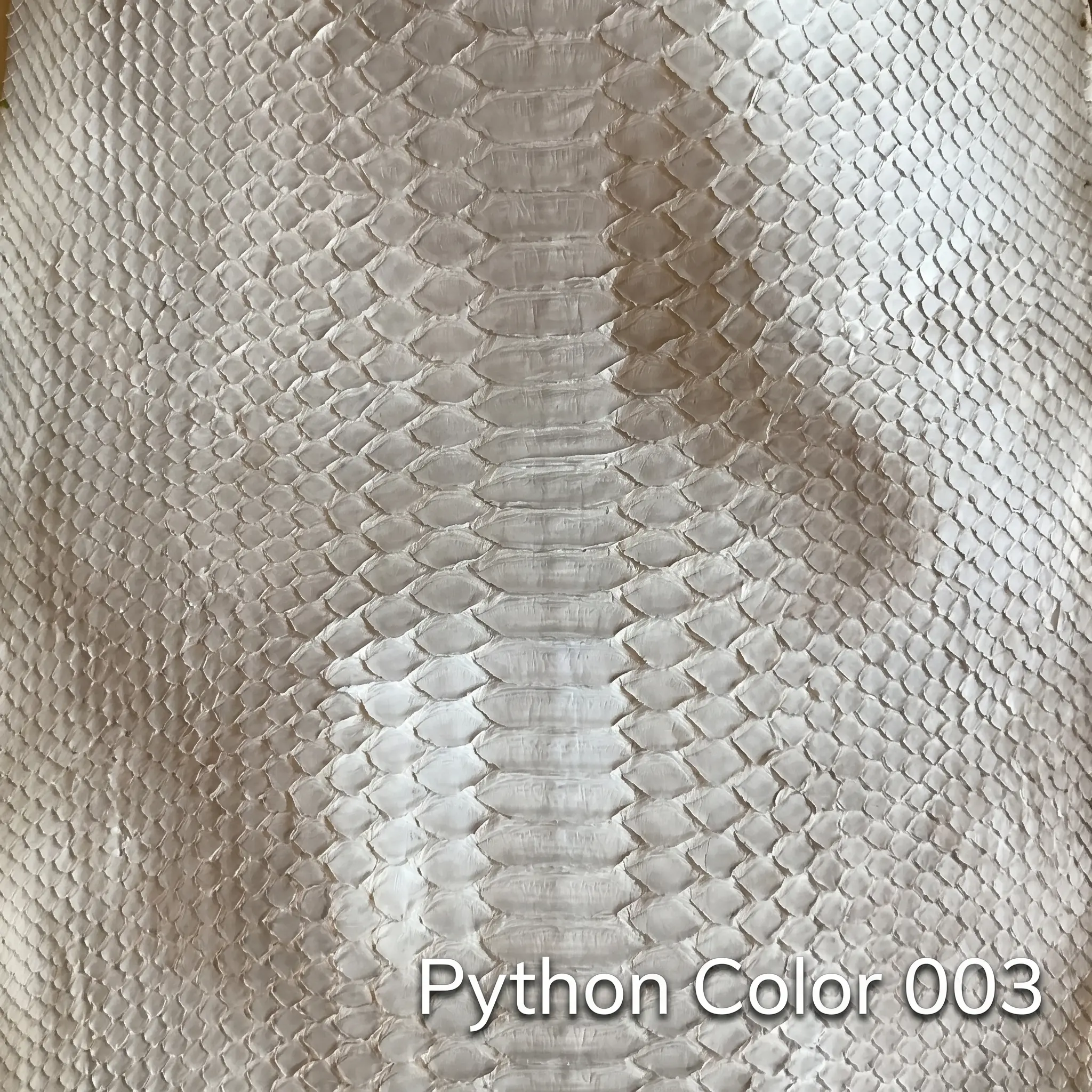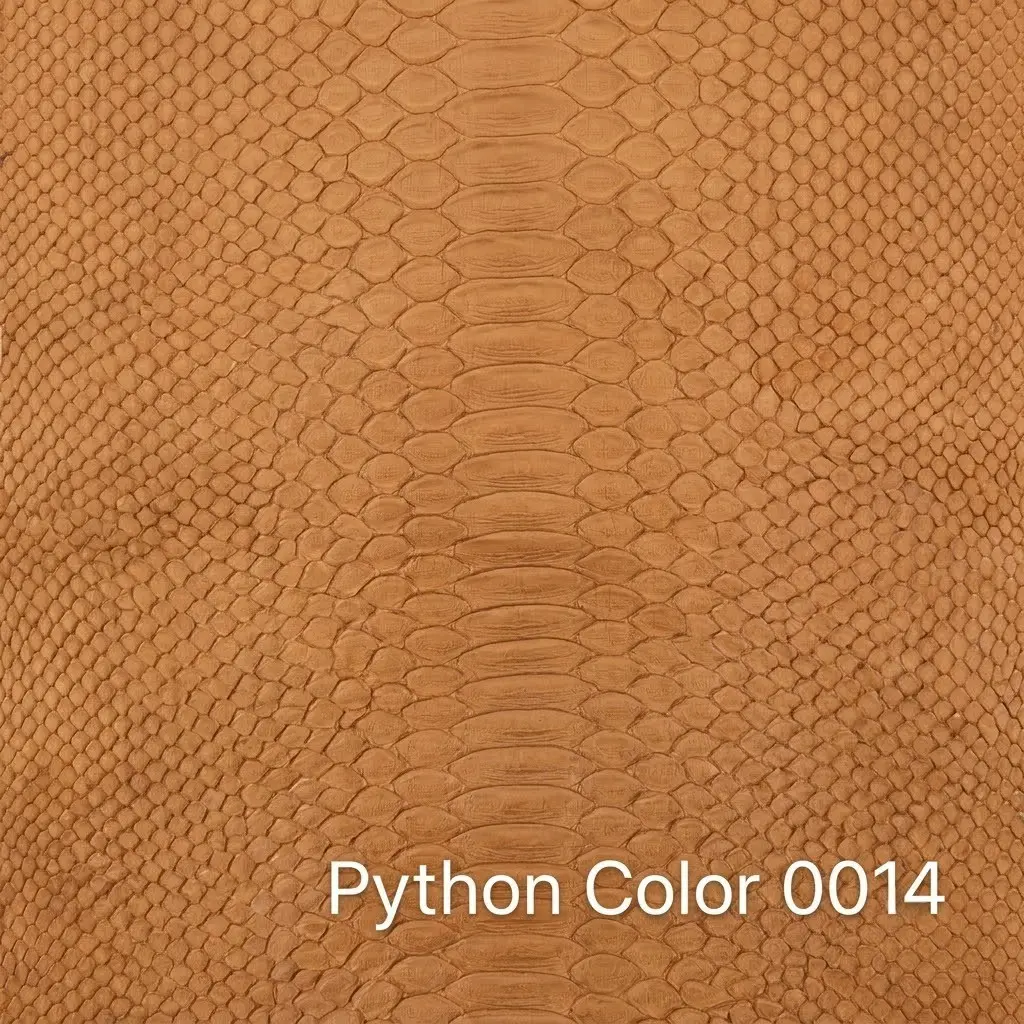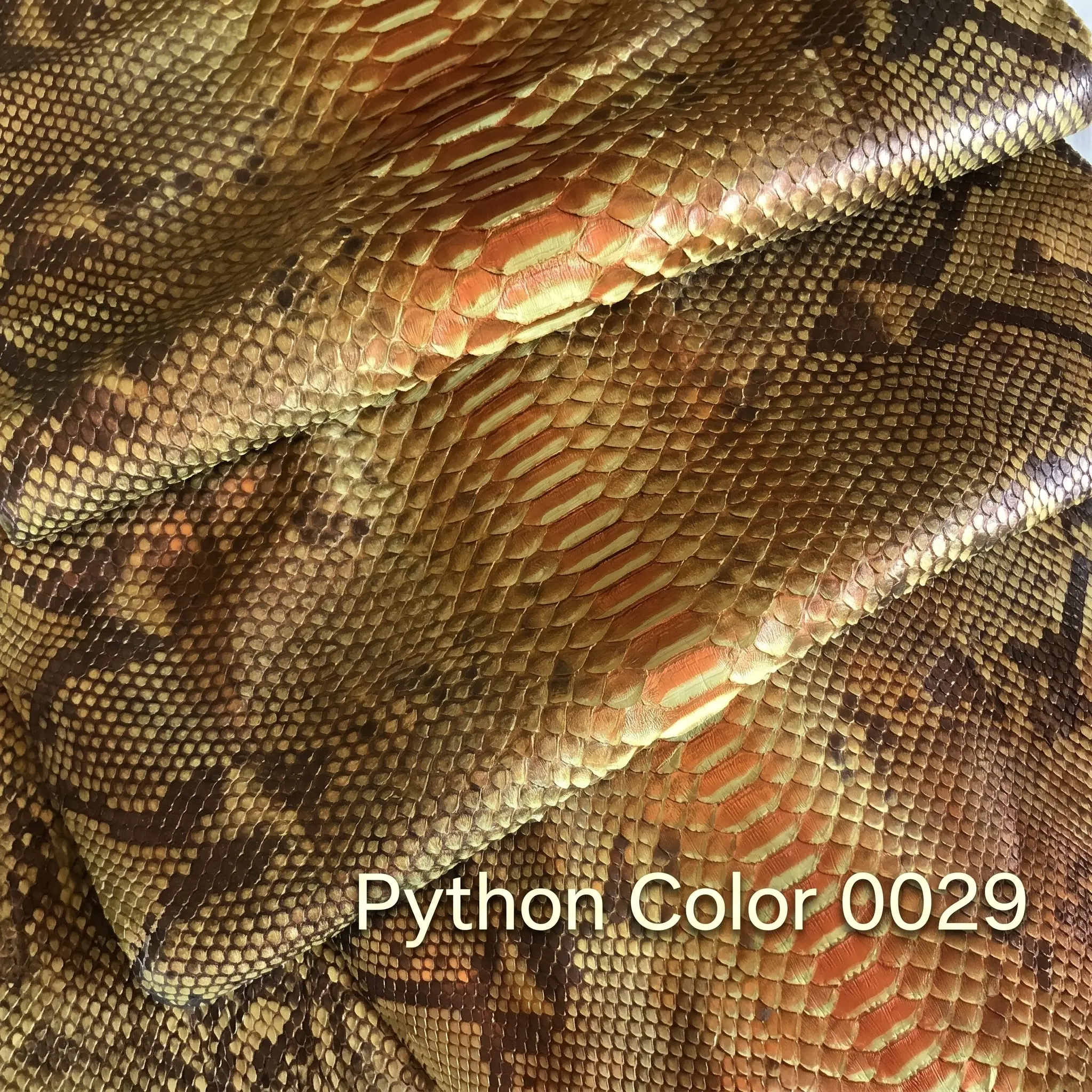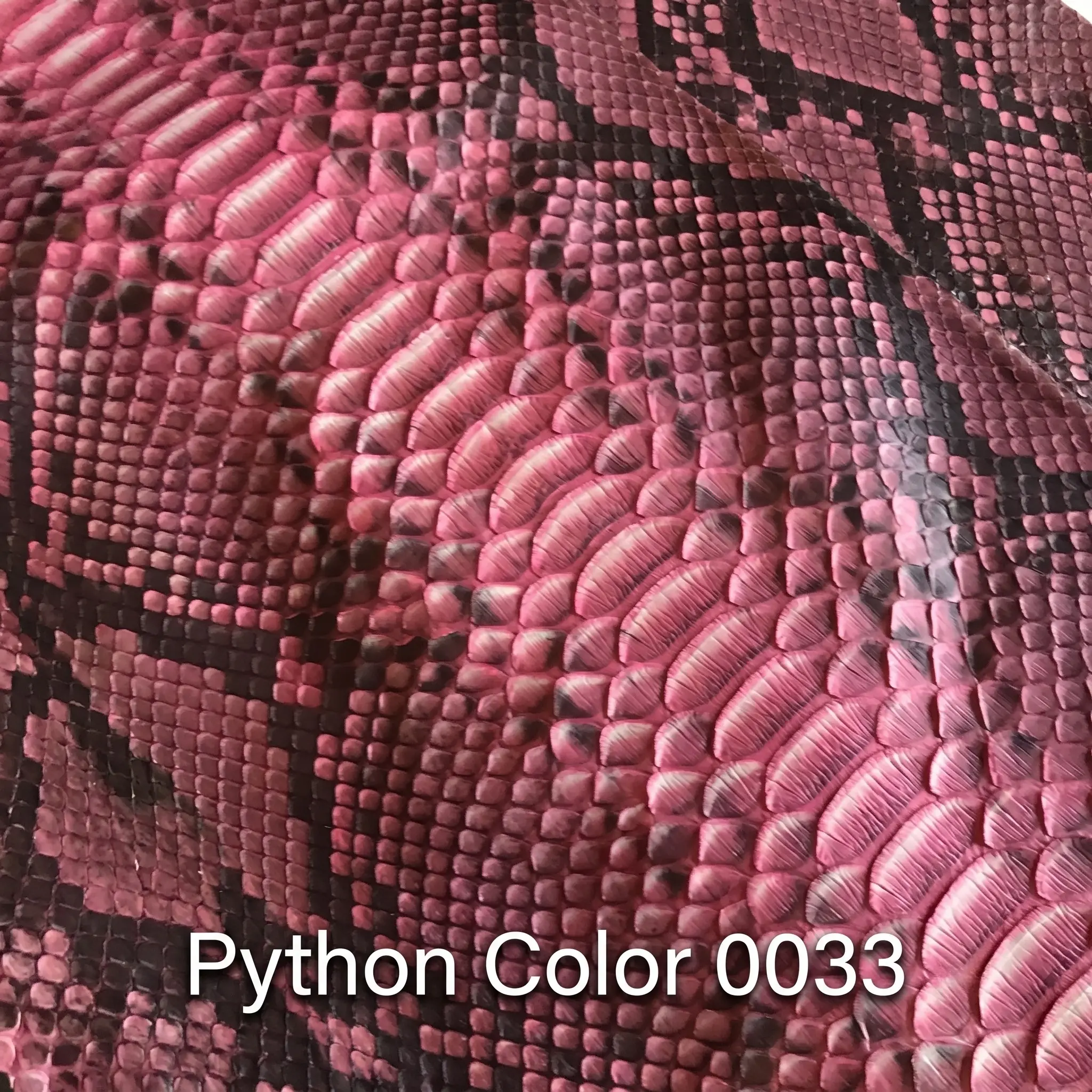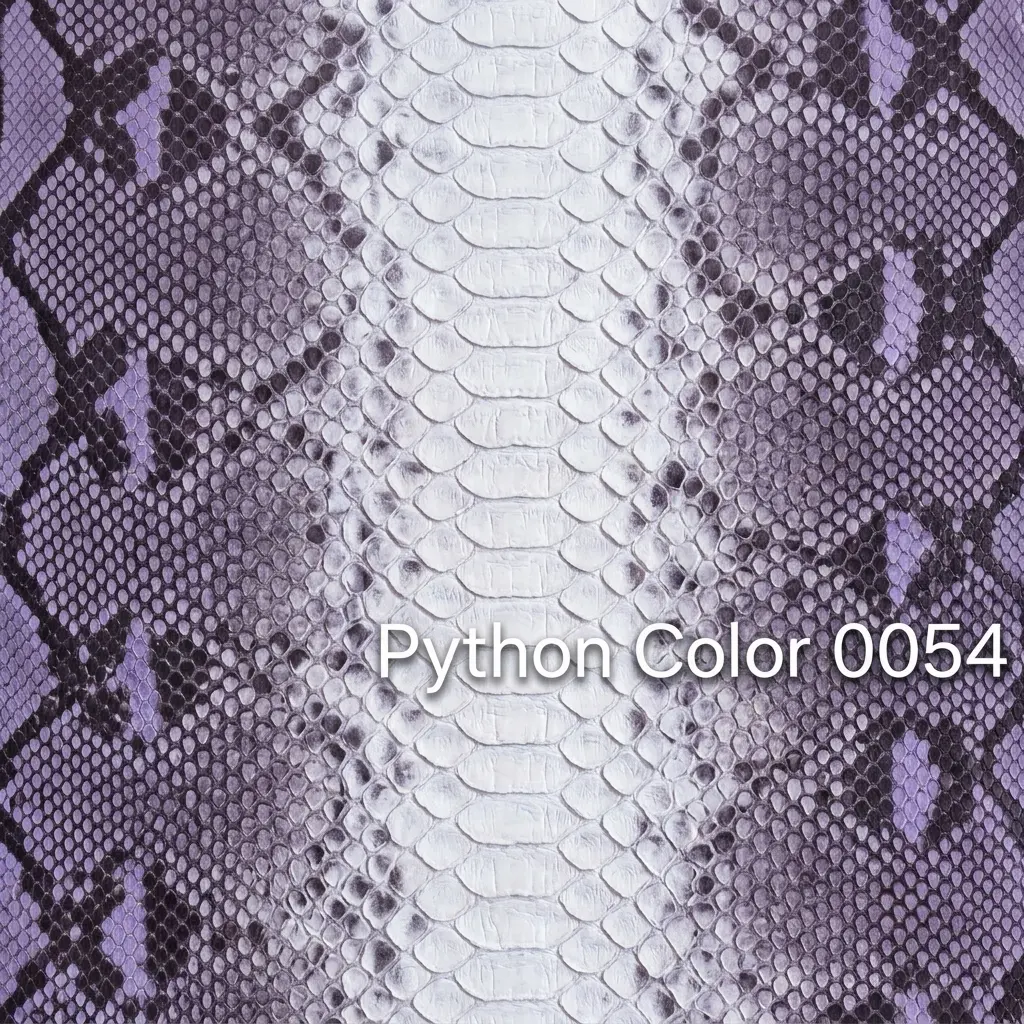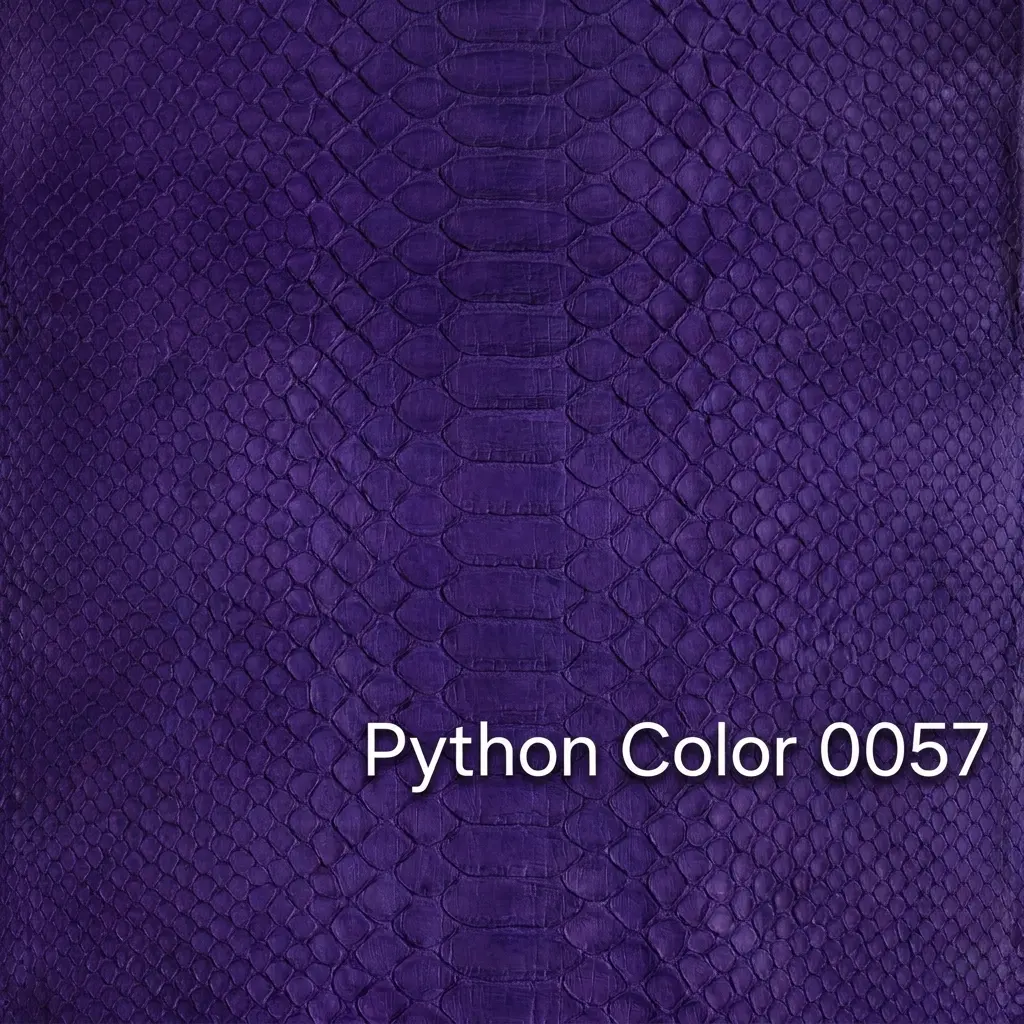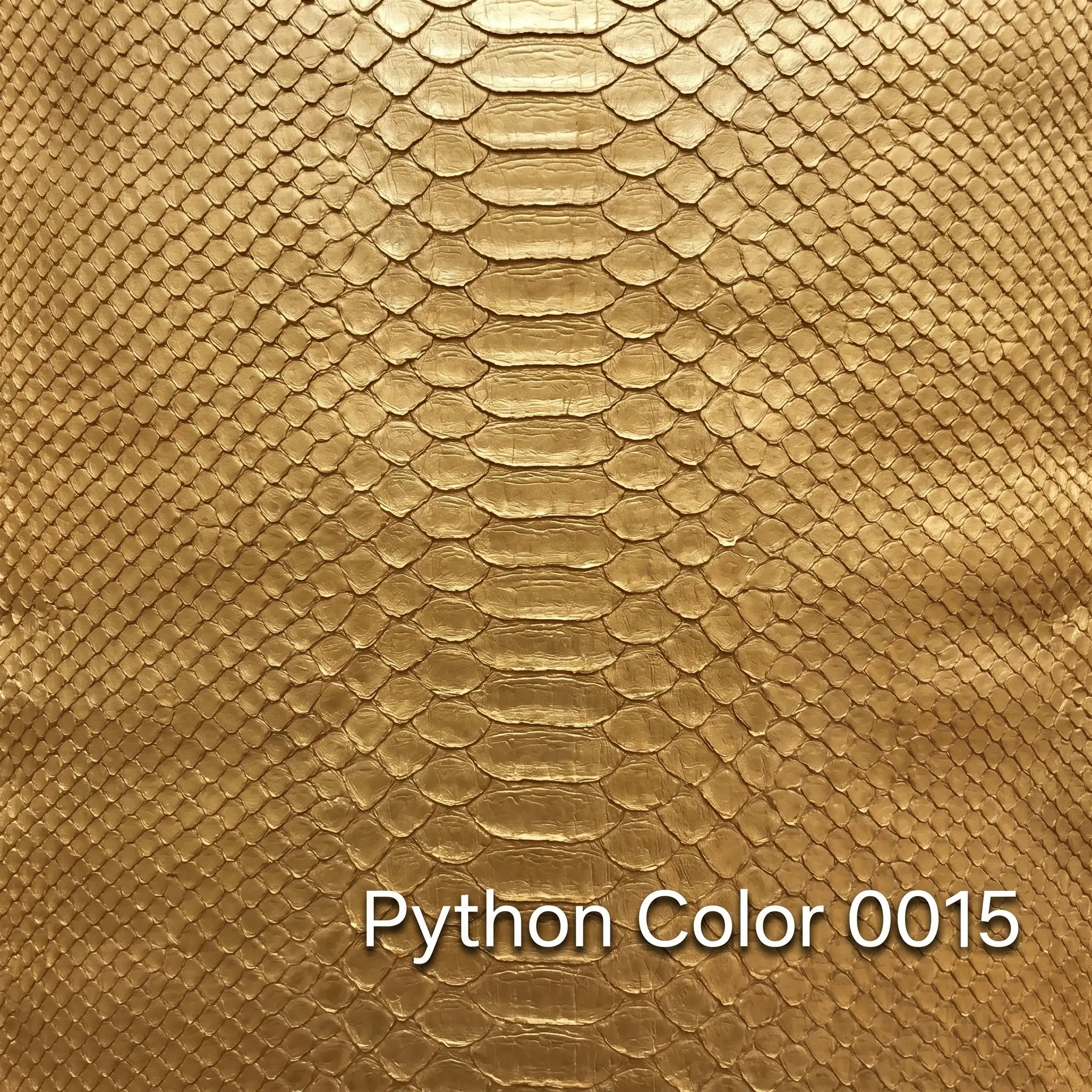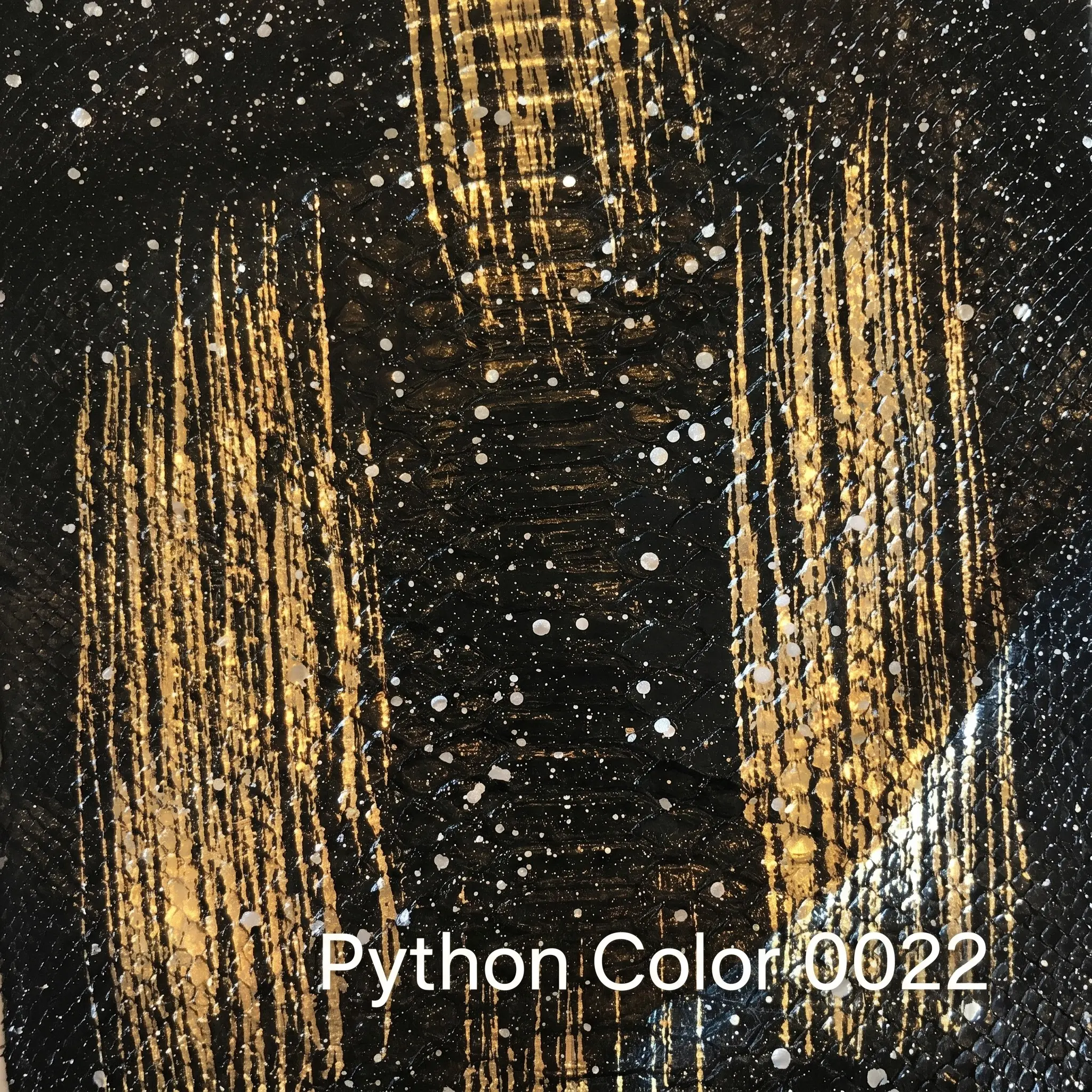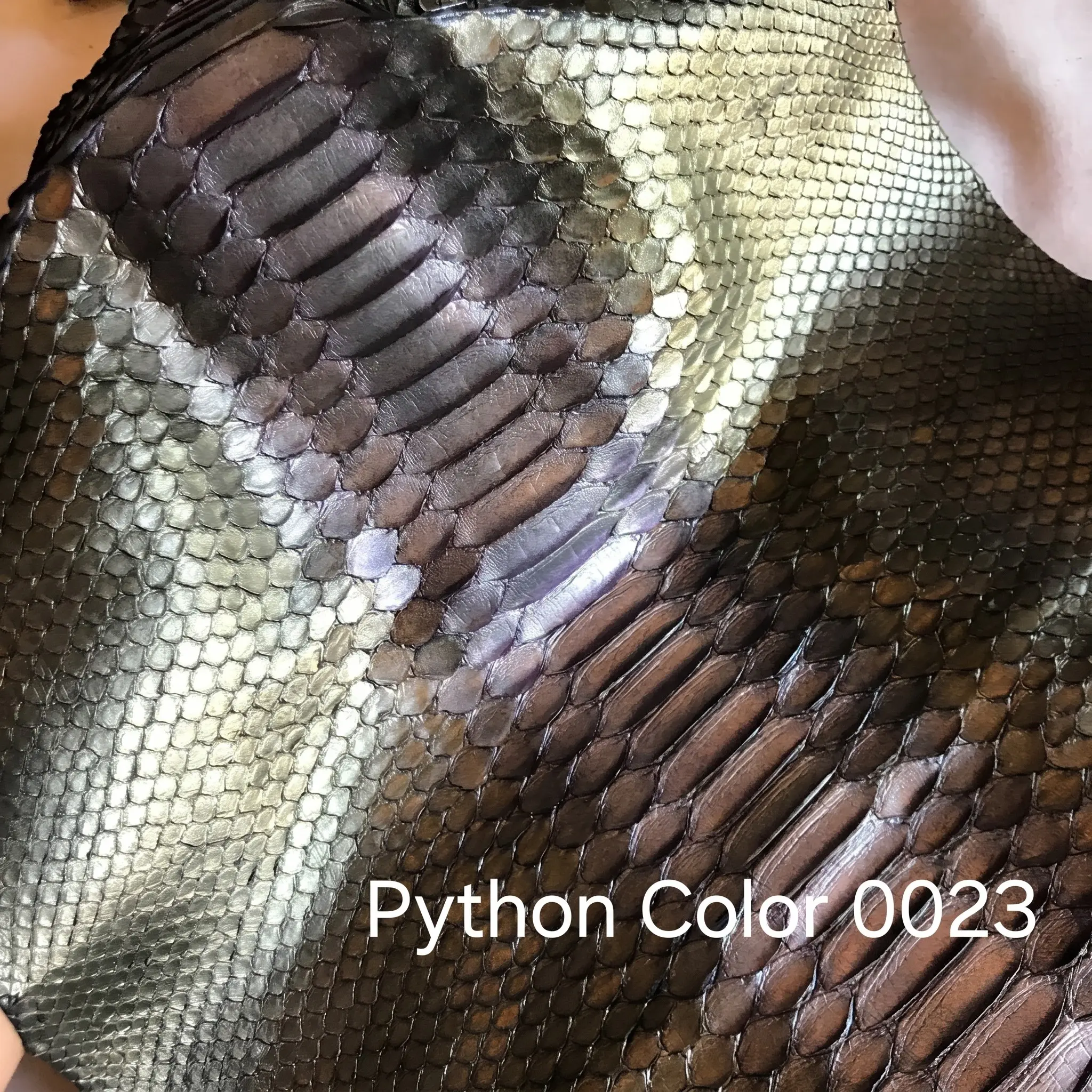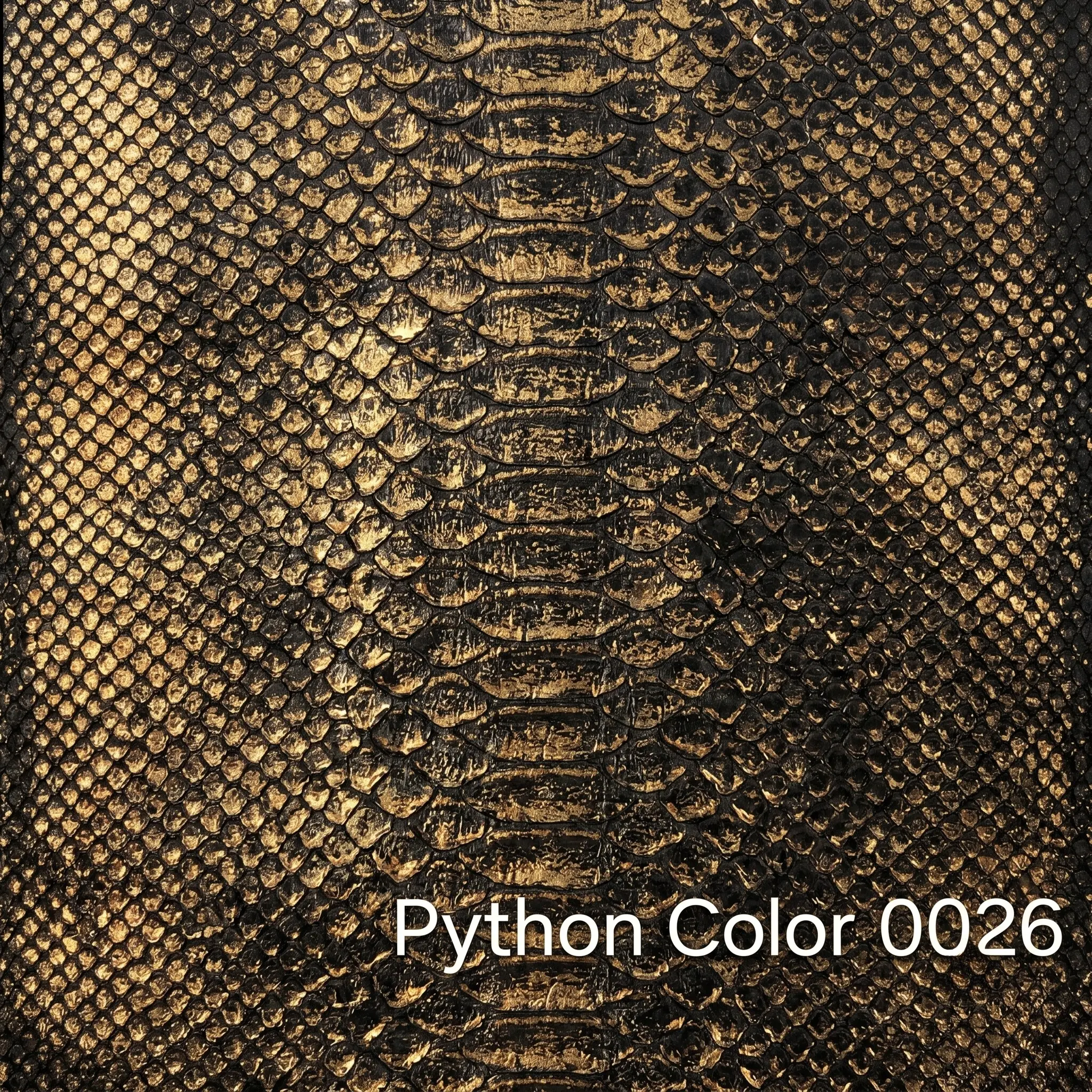
Python leather is genuine snake skin that has been tanned and finished for use in bags, wallets, footwear, clothing, and accessories. Its defining feature is a natural pattern of overlapping, directional scales. Genuine Python can be dyed, glazed, painted, or given specialty finishes without losing its characteristic scale texture. When buying, look beyond color and focus on material disclosure, natural scale variation, craftsmanship, finish, sourcing, and the seller’s product information.
Python leather stands apart from alligator and crocodile because its scales create a flowing, directional pattern rather than broad, tile-like shapes.
That natural texture is why the same Python skin can look dramatically different depending on its color, finish, placement, and the product it is used to make.
Python leather is produced from genuine Python skin that has been preserved, tanned, colored, and finished for use in leather goods.
Unlike embossed cowhide made to imitate snake skin, genuine Python retains actual overlapping scales. Understanding how these unique scales compare to other types of exotic leather helps buyers select the right finish. Those scales form an organic pattern that varies naturally across the hide.
Common characteristics include:
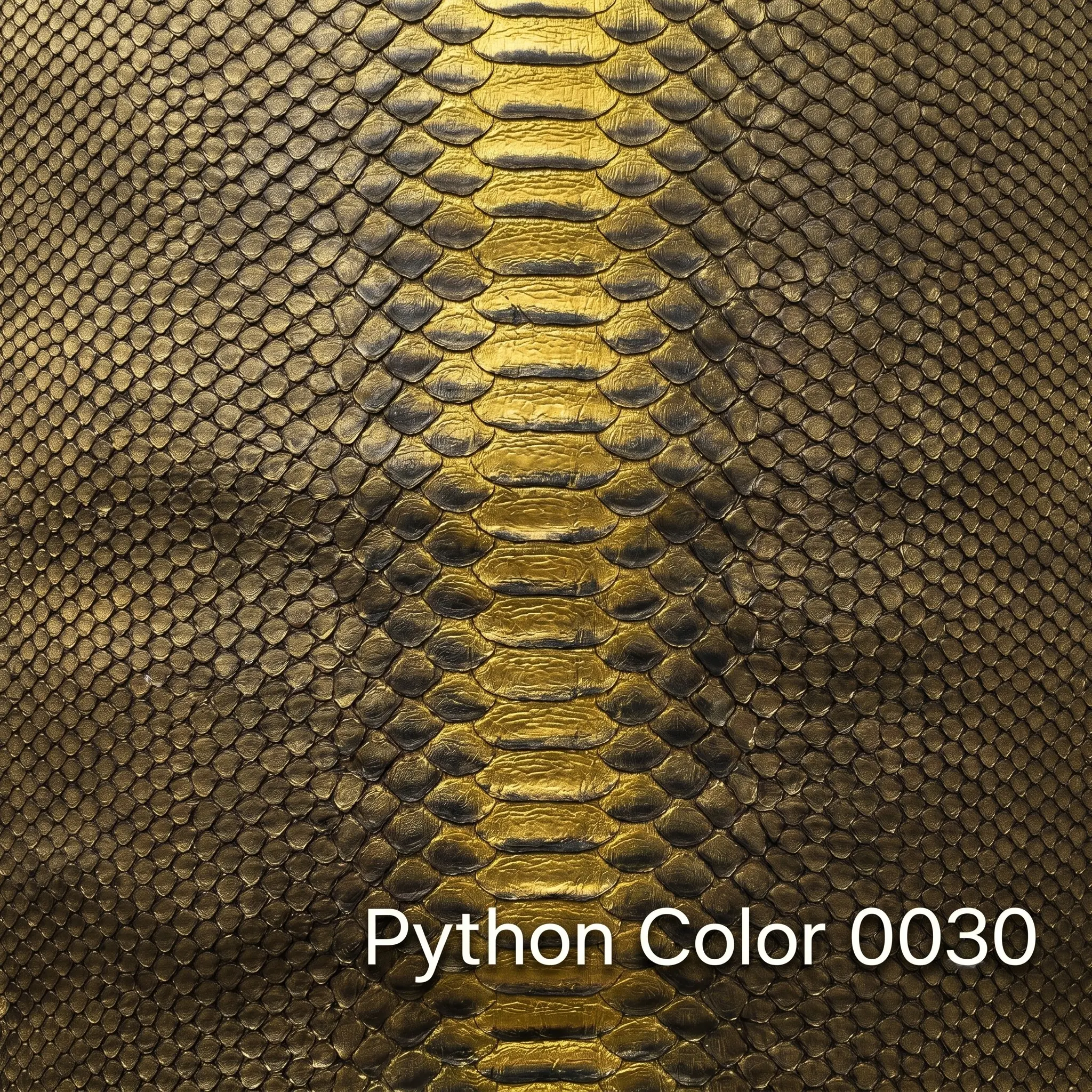
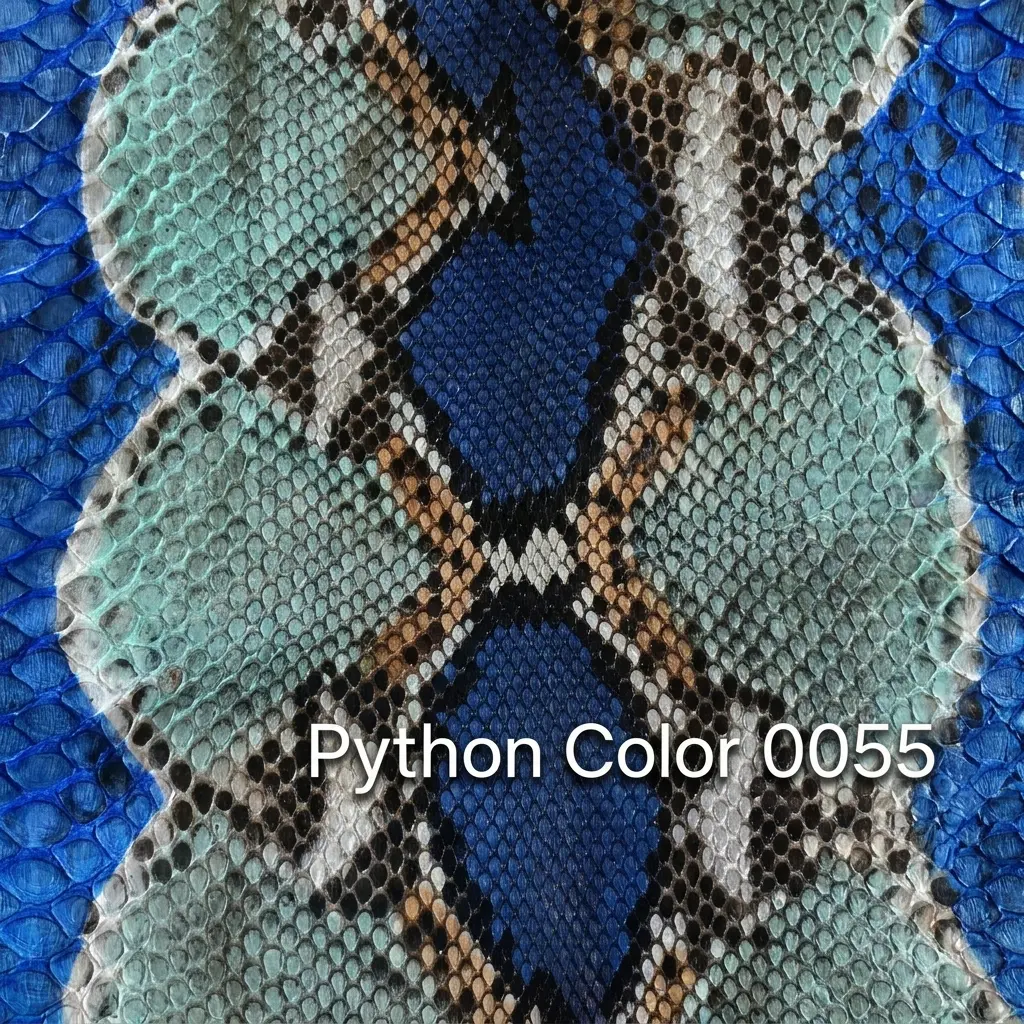
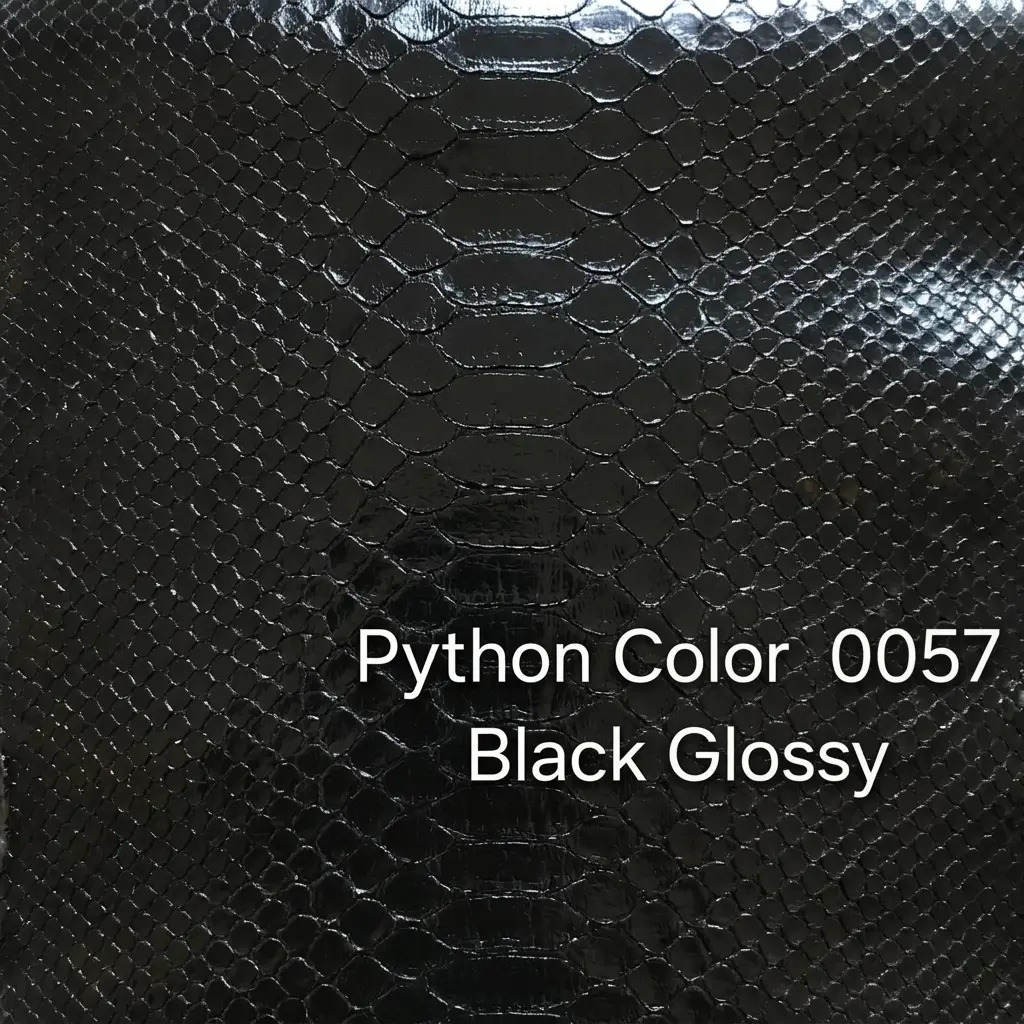
Real Python leather does not have to be brown, tan, or another “natural” snake color.
Tanning and finishing can create everything from understated neutrals to vivid colors, metallic effects, hand-painted patterns, and multi-tone designs.
For example, the Lumina Pearl Python Top Handle shows how Python can take on a specialty pearl finish, while the Avalon Python Satchel demonstrates how the material works in both solid and contrasting color combinations.
Color alone therefore does not tell you whether Python leather is genuine.
The underlying scale structure matters much more.
There is no single home test that proves authenticity, especially once leather has been heavily finished.
Instead, assess several details together:
Real skin should not resemble a perfectly repeating printed pattern. Scale sizes and arrangements naturally change across different sections of the hide.
Python scales overlap in a directional pattern. Their edges may have slight natural movement rather than appearing completely flat like a printed surface.
A trustworthy listing should clearly identify whether the product uses genuine Python leather, Python accents, or another material embossed with a snake pattern.
Authenticity alone does not guarantee a good product. Examine stitching, scale placement, lining, hardware, edge finishing, and overall construction.
One advantage of genuine Python is how differently its pattern can be used.
The Chase Python Bag gives the scales a large surface on which to become part of the handbag’s design.
On a smaller accessory, the Authentic Python Wallet – Pastel Purple shows how the scale pattern works at a more compact size.
Python can also be used beyond traditional handbags. The Python Leather Sling Bag brings the material into a more casual bag format, while Python skin is also used throughout the collection for caps, jackets, footwear, and customized accessories. If a handbag is what you are looking for, our guide to choosing the right Python bag breaks down how style, size, finish, and intended use can help you narrow down the best option.
Use this simple buyer checklist:
Choose genuine Python leather if you want an exotic material where the natural scale pattern plays a major role in the design.
It can appear subtle in a neutral finish, dramatic in contrasting colors, or completely different again when painted or given a specialty treatment. The important thing is to judge more than the species name: look at the actual skin, finish, craftsmanship, construction, and intended use.
Understanding those details makes it easier to recognize what you are buying and choose a Python leather piece that genuinely fits your style. Browse our collection of genuine Python leather bags here.
1. Is Python leather real leather?
Yes. Genuine Python leather is made from actual Python skin that has been tanned and finished for use in leather goods.
2. How can you tell if Python leather is genuine?
Look for naturally varying, overlapping directional scales and clear material information from the seller. Avoid relying on one visual test alone, especially when the leather has been heavily dyed or finished.
3. Is it normal for Python leather scales to lift slightly?
Slight movement at the free edges of the overlapping scales can occur naturally. The scales should still be handled gently, particularly when cleaning, because rubbing against their direction can cause unnecessary damage.
4. Can genuine Python leather be brightly colored?
Yes. Genuine Python can be dyed, painted, glazed, or given other finishes while retaining its natural scale structure. Bright color does not automatically indicate imitation leather.
5. What should I look for when buying a Python leather bag?
Check the stated material, scale pattern, leather finish, stitching, scale placement, lining, hardware, construction, sourcing information, and whether the seller clearly explains what portions of the product use Python leather.