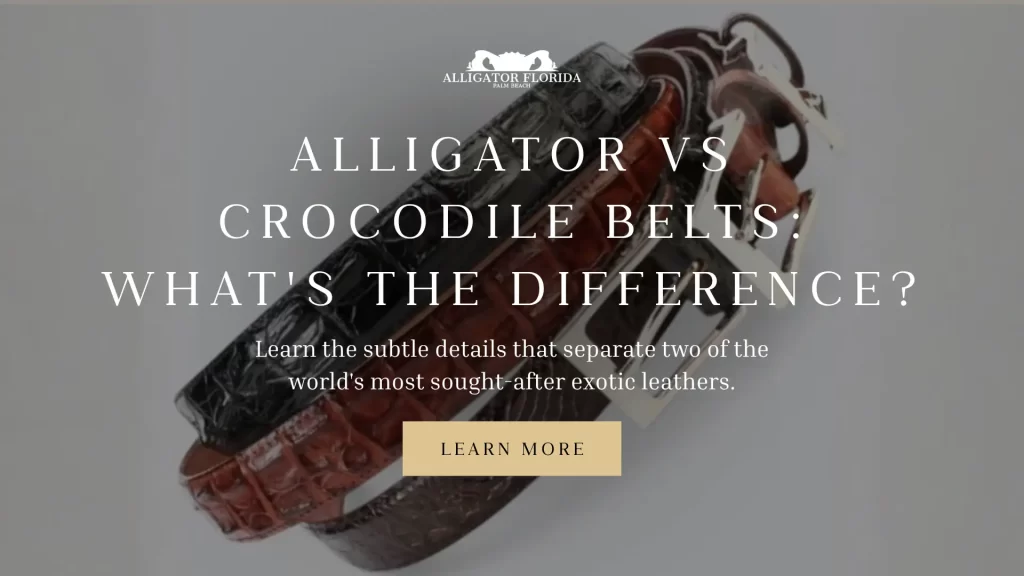

Choosing between an alligator and crocodile belt comes down to recognizing differences in scale patterns, texture, craftsmanship, and long-term value—not just appearance.
When comparing an alligator vs crocodile belt, many buyers assume the two are virtually identical. After all, both fall under the category of exotic leather belts, both carry premium price tags, and both are marketed as luxury accessories.
However, the differences go far beyond the animal itself.
Without understanding how genuine alligator and crocodile skins differ, it’s surprisingly easy to pay for a product that isn’t what you intended to buy. Whether you’re investing in your first exotic leather accessory or replacing a well-loved belt, knowing how to identify the right material ensures you’re paying for authentic craftsmanship—not clever marketing.
This guide explains the key differences between a real alligator belt and a crocodile skin belt, helping you make a confident and informed purchasing decision.
The easiest way to distinguish an alligator vs crocodile belt is by looking closely at the scales.
A real alligator belt is known for its:
By comparison, a crocodile skin belt often features:
These natural characteristics are formed by the animal itself, making every belt unique. No two genuine belts will ever have exactly the same scale arrangement.
Beyond the scale pattern, the overall visual character also differs.
A real alligator belt typically presents a smoother, more polished look. Its balanced scale formation makes it a favorite for business attire, formalwear, and understated luxury. For those who appreciate this refined profile, our alligator belly belt offers the ideal classic aesthetic, while our extra size belly belt ensures the same sophistication with a tailored, comfortable fit.
A crocodile skin belt, meanwhile, tends to have a more rugged appearance. The scales often display greater variation in size and shape, creating a bolder visual statement. If you are drawn to this distinct look, explore our crocodile hornback belt for a unique, three-dimensional texture, or view our extra size hornback option for a robust, substantial feel.
Neither style is objectively better—they simply appeal to different tastes.
If you prefer quiet sophistication, alligator leather often offers a more timeless aesthetic. If you enjoy accessories with stronger visual texture, crocodile leather may better suit your personal style.
One of the most common questions in the alligator vs crocodile belt debate is durability.
The truth is that both alligator and crocodile leather are exceptionally durable when sourced responsibly and crafted correctly.
What matters most is not whether the leather comes from an alligator or crocodile, but:
A poorly constructed belt made from premium leather will rarely outperform an artisan-crafted belt made with careful attention to detail.
This is why experienced buyers evaluate craftsmanship first and species second.
Luxury is not determined solely by the type of leather—it is also defined by how that leather is transformed into a finished product.
A high-quality real alligator belt begins with carefully selected Grade-A genuine skin. Skilled artisans then align the natural scale pattern, cut each section with precision, finish the edges by hand, and construct the belt to maintain both flexibility and structural integrity.
The same principles apply to a well-made crocodile skin belt.
Ultimately, superior craftsmanship allows the leather’s natural beauty to remain the focal point rather than being hidden beneath heavy processing or excessive finishing.
For buyers seeking lasting quality, artisan construction should always outweigh brand recognition.
When comparing exotic leather belts, long-term value should be measured over years of daily wear rather than at the moment of purchase. The comparison between an alligator vs crocodile belt isn’t about declaring one universally superior. Instead, it is about understanding how each unique scale pattern aligns with your wardrobe and lifestyle. To learn how to match these unique textures to your outfits, you can read our guide on how to choose alligator belt for your style.
If you appreciate symmetry, understated elegance, and a refined finish, a real alligator belt is the preferred choice for formal wardrobes. If you prefer a more rugged texture and naturally varied appearance, a crocodile skin belt delivers distinctive character for casual luxury styling. Whichever you choose, focusing on genuine materials and artisan craftsmanship provides far greater value than purchasing solely for a designer label.
Looking for an understated statement piece to pair with tailored suits? Browse our premium alligator skin belt styles here.
1. How can I tell if a belt is made from real alligator leather?
A real alligator belt typically has larger, more symmetrical scales with a smoother, more consistent pattern than crocodile leather.
2. Is crocodile leather better than alligator leather?
Neither is universally better. Both are premium materials, and the better choice depends on your preferred appearance, craftsmanship, and intended use.
3. Why are alligator belts often considered more luxurious?
Many buyers appreciate alligator leather for its balanced scale pattern and refined appearance, making it especially popular for formal accessories.
4. Are alligator and crocodile belts equally durable?
Yes. Both materials offer excellent durability when crafted from high-quality hides using proper tanning and construction techniques.
5. What should I prioritize when buying exotic leather belts?
Look beyond the species of leather and focus on genuine materials, artisan craftsmanship, construction quality, and overall finishing to ensure lasting value.